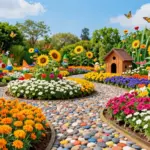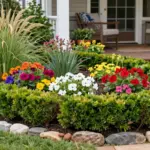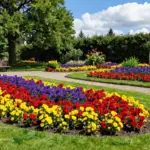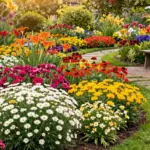
Creating a welcoming front yard can often feel overwhelming. With the rising interest in sustainable gardening and low-maintenance designs, people are searching for practical solutions that enhance their home’s appeal while being easy to care for. This post brings you exciting ideas to transform your front yard using rocks, allowing you to create a drought-tolerant oasis that requires little water and even less upkeep.
If you’re a homeowner eager to revamp your outdoor space but find yourself short on time or water, this guide is perfect for you. Whether you’re a seasoned gardener or just starting, these rock-based landscaping ideas will help you design a stunning front yard with minimal effort. You’ll discover 12 creative concepts that are not only aesthetically pleasing but also align with sustainable gardening practices.
Get ready to dive into rock garden designs that are practical, visually appealing, and perfect for your urban setting. You’ll gain insights on how to implement these ideas effectively, ensuring your front yard stands out and saves water at the same time.
Key Takeaways
– Low Maintenance Landscaping: By incorporating rocks, you reduce the need for mowing and watering, making yard care simpler and more eco-friendly.
– Drought-Tolerant Plants: Pair rocks with drought-resistant plants to create a harmonious environment that thrives on minimal water.
– Variety of Rock Garden Designs: Explore diverse styles, from Zen rock gardens to boulder clusters, allowing you to choose what best fits your aesthetic.
– Xeriscaping Ideas: Learn how to implement xeriscaping techniques that save water while ensuring your garden remains lush and beautiful.
– Sustainable Gardening Practices: Embrace practices that benefit the environment, promote biodiversity, and create a healthy ecosystem in your front yard.
1. Zen Rock Garden
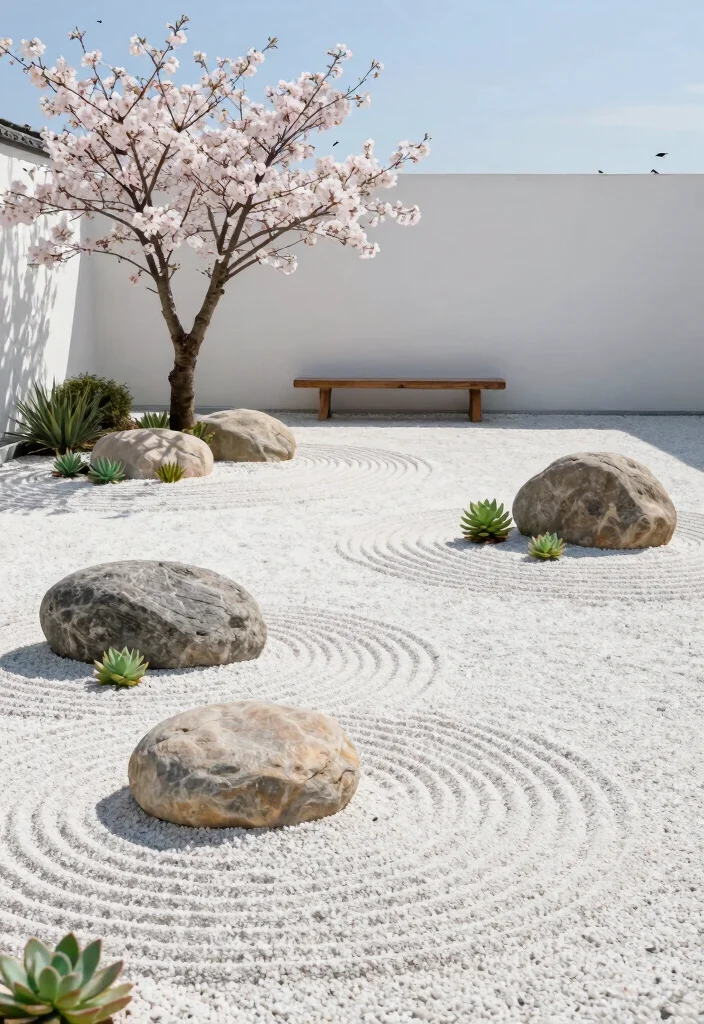
If you seek a serene escape right in your front yard, a Zen rock garden might be just what you need. This minimalist design features raked gravel or sand complemented by carefully placed rocks that symbolize natural landscapes. The calming simplicity of a Zen garden promotes mindfulness, creating a peaceful retreat for you and your guests. Adding drought-tolerant plants like sedums or ornamental grasses can enhance this tranquil space, offering vibrant colors and gentle movement throughout the seasons.
To start, select a flat area with good drainage and clear away any existing grass or plants. Lay down landscape fabric to keep weeds from disrupting your peaceful oasis. Choose a mix of stones and gravel; bright white stones provide contrast, while darker hues lend a classic touch. Integrate low-water plants such as succulents for added variety without the hassle of frequent watering. Remember to rake the gravel regularly to maintain its tidy appearance.
Key steps to create your Zen garden:
– Choose a flat, well-draining area.
– Install landscape fabric to deter weeds.
– Select a variety of rocks for visual interest.
– Add low-water plants for texture and color.
– Rake gravel frequently for a neat look.
This garden style is visually appealing and allows for easy upkeep, making it an excellent choice for sustainable landscaping.
2. Rock Pathway with Edging
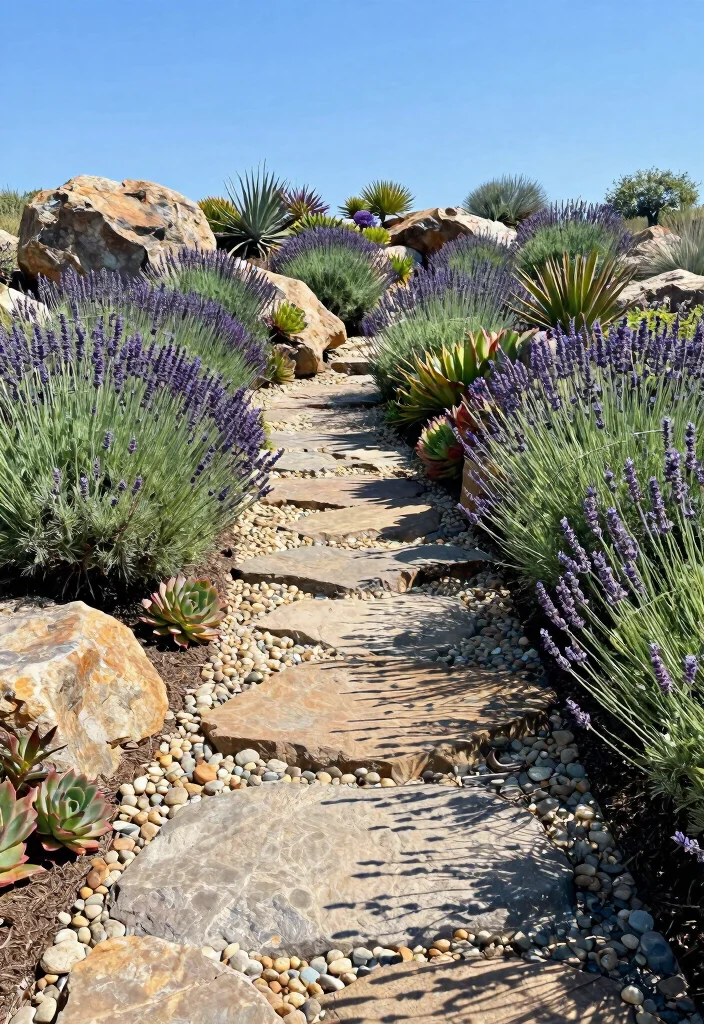
Imagine a winding rock pathway inviting visitors into your front yard. This attractive feature not only guides the way but also adds natural beauty to your landscape. By using various sizes and shapes of stones, you can create a pathway that feels organic and welcoming. Edging the path with larger rocks or bricks can define the space, ensuring that plants stay where they belong. Pair this design with native, drought-tolerant plants for a colorful border that requires minimal watering.
Start by marking the desired route with stakes or flags to visualize the path. Dig out a slight trench for the rocks to sit securely, then lay down landscape fabric to block weeds. Use a combination of stones for a rustic charm; place larger ones at the edges and smaller ones for the main pathway. Fill any gaps with sand or gravel for stability, and choose low-water plants like lavender or agave to enhance the edges.
Steps to build your rock pathway:
– Mark the desired path using stakes.
– Dig a trench for the rocks.
– Lay landscape fabric to prevent weeds.
– Use various stones for a natural look.
– Fill gaps with sand or gravel for stability.
– Add low-water plants along the edges for color.
This pathway not only beautifies your front yard but also offers a low-maintenance solution that thrives with minimal watering.
Did you know a winding rock pathway can cut water use by up to 30% in drought-prone front yards? Use stones of mixed sizes and edge with larger rocks or bricks to define paths, then add drought-tolerant natives for color—front yard landscaping ideas with rocks that are low-maintenance.
3. Rock Garden with Succulents
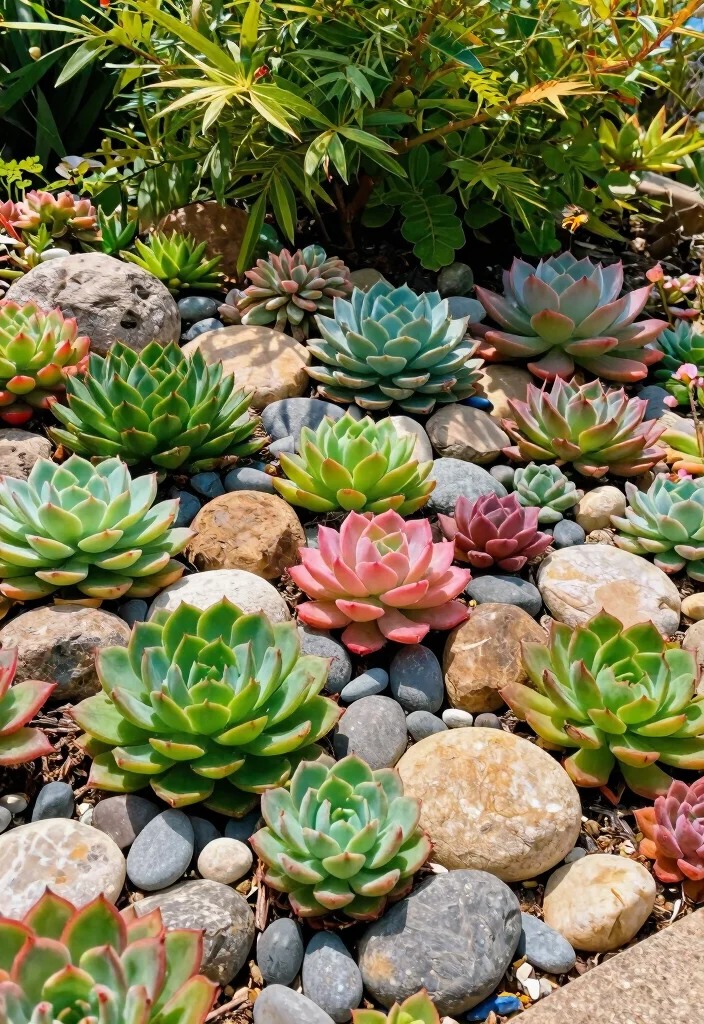
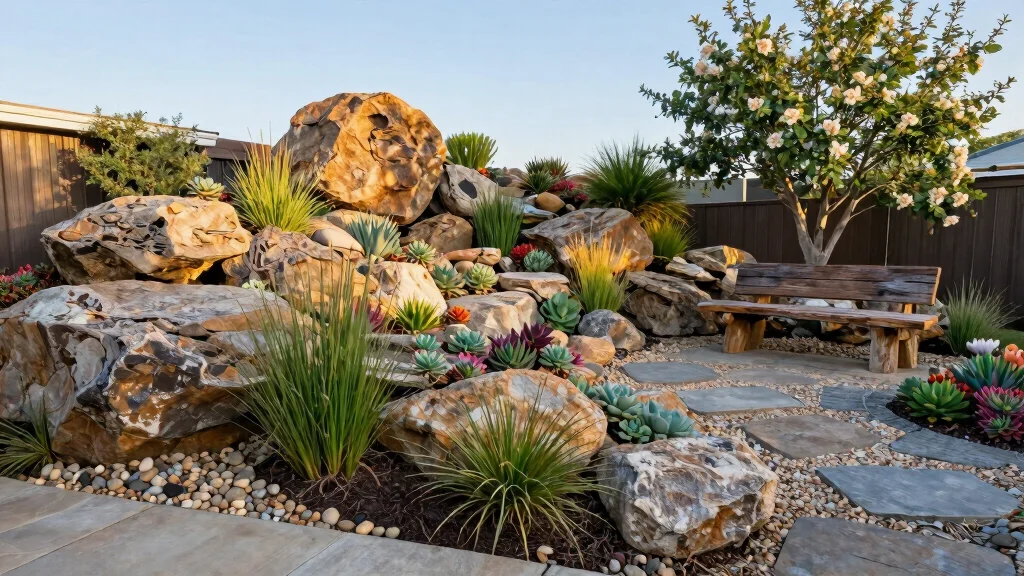
Creating a rock garden filled with vibrant succulents is an exciting way to showcase nature’s artistry. With various shapes and colors, succulents can turn a simple rock garden into a stunning focal point. By pairing different succulent types with contrasting rock sizes and textures, you can craft an eye-catching display that is easy to maintain. This design invites a lively atmosphere while requiring minimal water.
Begin by choosing a sunny spot, as most succulents thrive in bright light. Improve drainage by mixing sand or gravel into the soil before you start planting. Arrange larger stones as a base and plant the succulents around them, ensuring a harmonious look. Select a variety of succulents like Echeveria or Sedum for diverse colors and shapes. Water sparingly, as succulents prefer dry conditions, and consider adding decorative pebbles for a polished finish.
Key points for your succulent rock garden:
– Pick a sunny location for planting.
– Enhance soil drainage with sand or gravel.
– Use larger stones as a foundation.
– Choose a mix of succulents for variety.
– Water sparingly to prevent rot.
This design not only minimizes watering needs but also brings vibrant life to your front yard, attracting butterflies and bees.
4. Boulder Cluster Accents
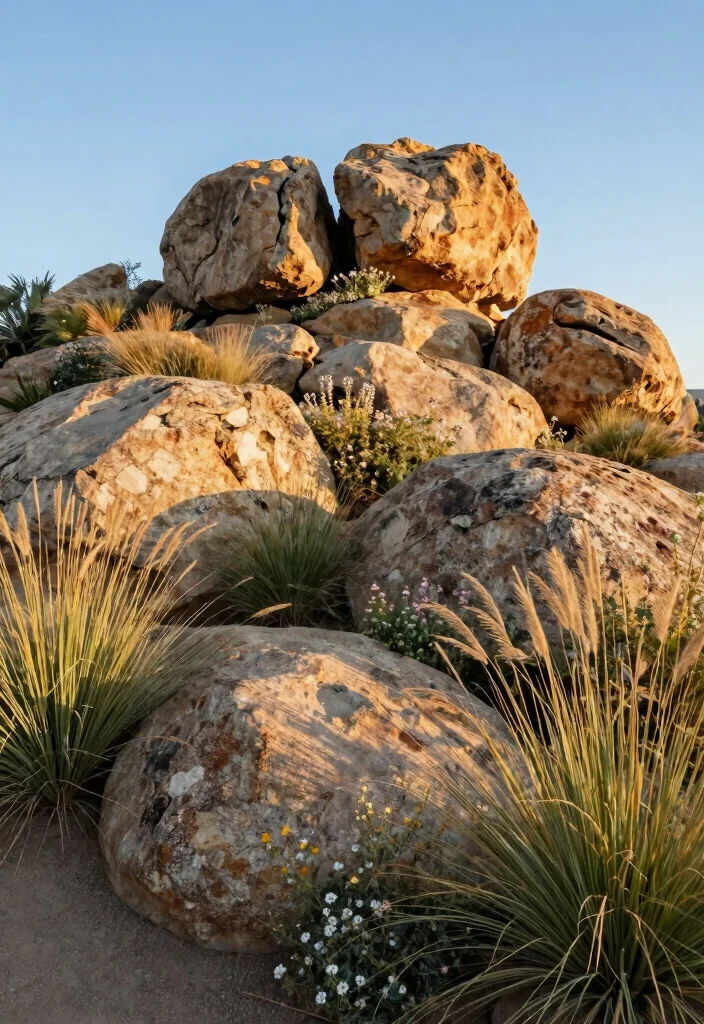
Incorporating boulders into your front yard can create stunning visual anchors that resemble natural rock formations. A cluster of boulders adds a rugged, organic feel, making your landscape more inviting. Not only do boulders serve as striking decor, but they can also provide unique seating options. Surrounding these stones with native, low-water plants ensures a cohesive design that stays low-maintenance.
Select boulders of different sizes to create visual interest and contrast. Group them together rather than placing them individually for a more natural look. Consider planting drought-tolerant native flora like ornamental grasses around the boulders to soften their appearance. Using mulch or stone chips can help retain moisture and reduce weed growth in the area.
Steps to create your boulder cluster:
– Choose boulders of varying sizes for interest.
– Group them together for a natural effect.
– Plant native, drought-tolerant plants around them.
– Use mulch to retain moisture and curb weeds.
– Regularly check for weeds and remove as necessary.
This idea not only enhances your yard’s natural beauty but also promotes low-water landscaping.
5. Gravel Mulched Flower Beds
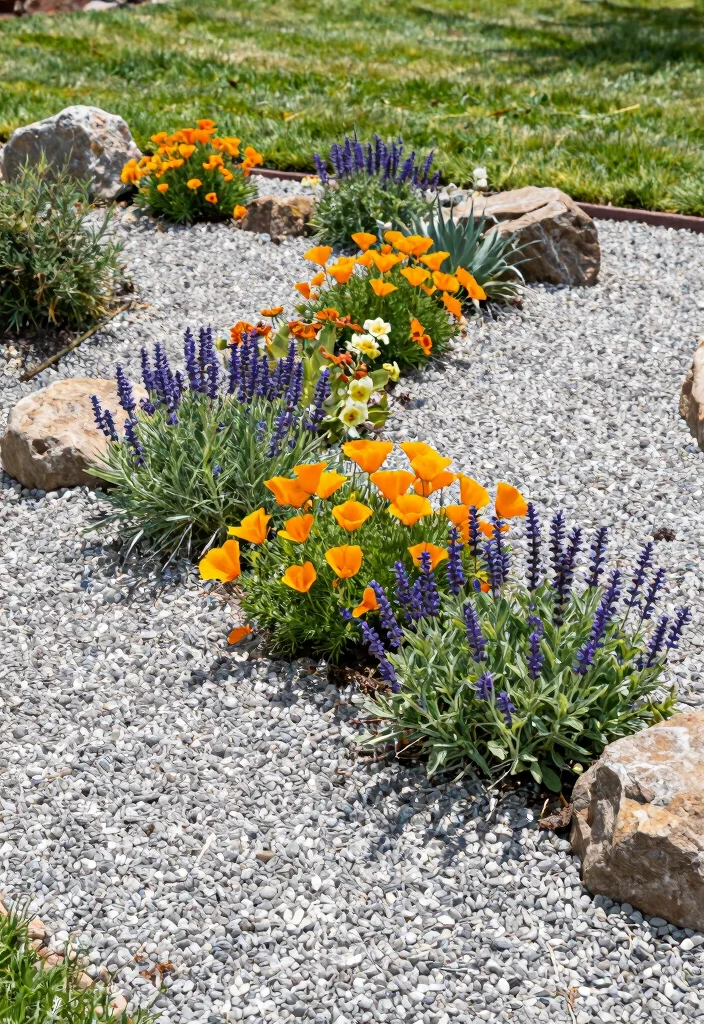
Transforming your flower beds with gravel mulch can significantly cut down on watering while providing a sleek, modern look. Gravel serves to protect the soil, suppress weeds, and maintain moisture for drought-tolerant flowers. This approach not only adds functionality but also enhances the aesthetic appeal of your front yard.
Begin by selecting gravel that complements your home’s exterior colors; lighter shades can brighten darker spots. Clear the flower bed of existing weeds and enrich the soil with organic compost before planting. Opt for low-water flowers like California poppies or salvia for bright blooms. Spread a layer of gravel over the bed, ensuring space around the plants for growth. You might also mix in decorative rocks for added texture.
Key steps for gravel mulched flower beds:
– Choose gravel that matches your home’s style.
– Clear weeds and enrich the soil.
– Plant colorful, low-water flowers.
– Add a layer of gravel for a clean look.
– Mix in decorative rocks for visual interest.
This method not only beautifies your front yard but also exemplifies sustainable gardening by reducing water usage.
6. Rock Retaining Wall
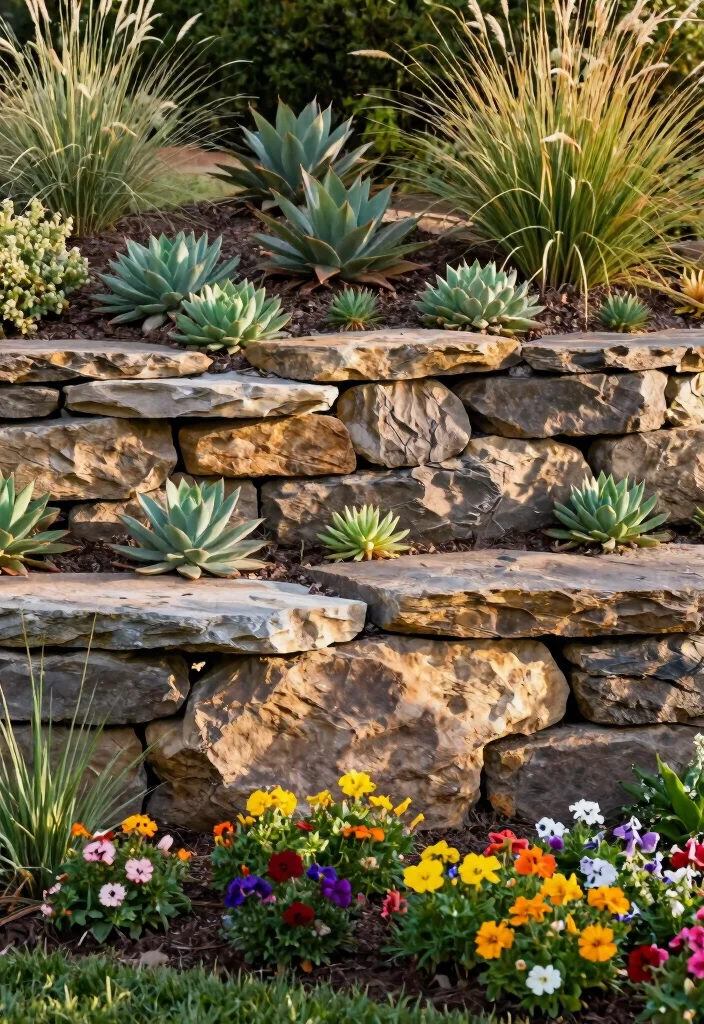
Building a rock retaining wall can offer both practical and aesthetic benefits to your front yard. These walls help manage slopes and create defined garden beds, making your landscaping more accessible. Crafted from boulders or flat stones, they add texture and visual depth, allowing for the integration of low-water plants.
First, identify the area needing stabilization and take measurements to guide your project. Dig out the space to establish a solid base for the stones. Stack the rocks with heavier ones at the bottom for stability. Plant low-water varieties like succulents or ornamental grasses on top for a splash of color and softness. Using gravel at the base can improve drainage and prevent erosion.
Steps to create your rock retaining wall:
– Identify and measure the area needing support.
– Dig a solid base for stability.
– Stack stones with heavier ones at the bottom.
– Plant low-water plants for color and texture.
– Use gravel at the base for drainage.
This design enhances your yard’s functionality and introduces a natural appearance that blends beautifully with the landscape.
7. Dry Creek Bed
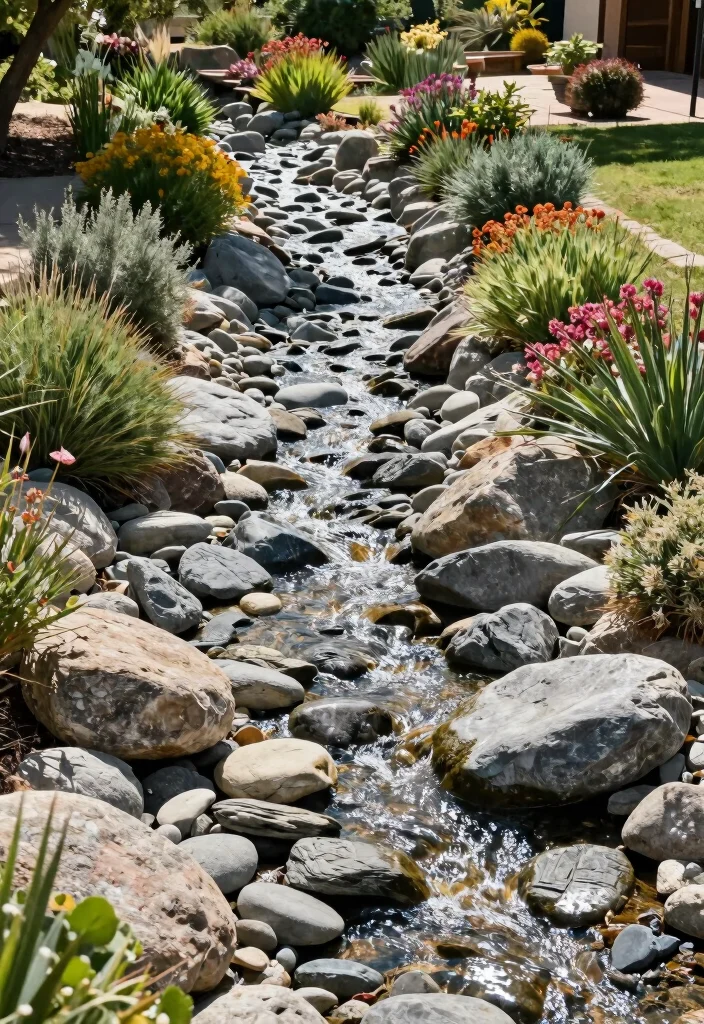
A dry creek bed is a clever way to manage excess rainwater while adding a unique design element to your front yard. By arranging rocks of various sizes to mimic a natural watercourse, you can create an eye-catching feature that aids in drainage without requiring additional water. This design beautifully complements drought-tolerant plantings as well.
Plan the layout of your dry creek bed to follow the natural slope of your yard. Remove any grass and soil from the planned area. Use larger rocks to outline the banks and fill the center with smaller stones. Incorporate native plants along the banks for added beauty and stability. Adding organic mulch can help reduce erosion during heavy rainfall.
Key steps to build your dry creek bed:
– Plan the layout according to your yard’s slope.
– Clear grass and soil from the area.
– Outline banks with larger rocks.
– Fill the center with smaller stones.
– Add native plants for stability and beauty.
This sustainable design not only manages water effectively but also enhances your yard’s visual appeal.
8. Vertical Rock Garden
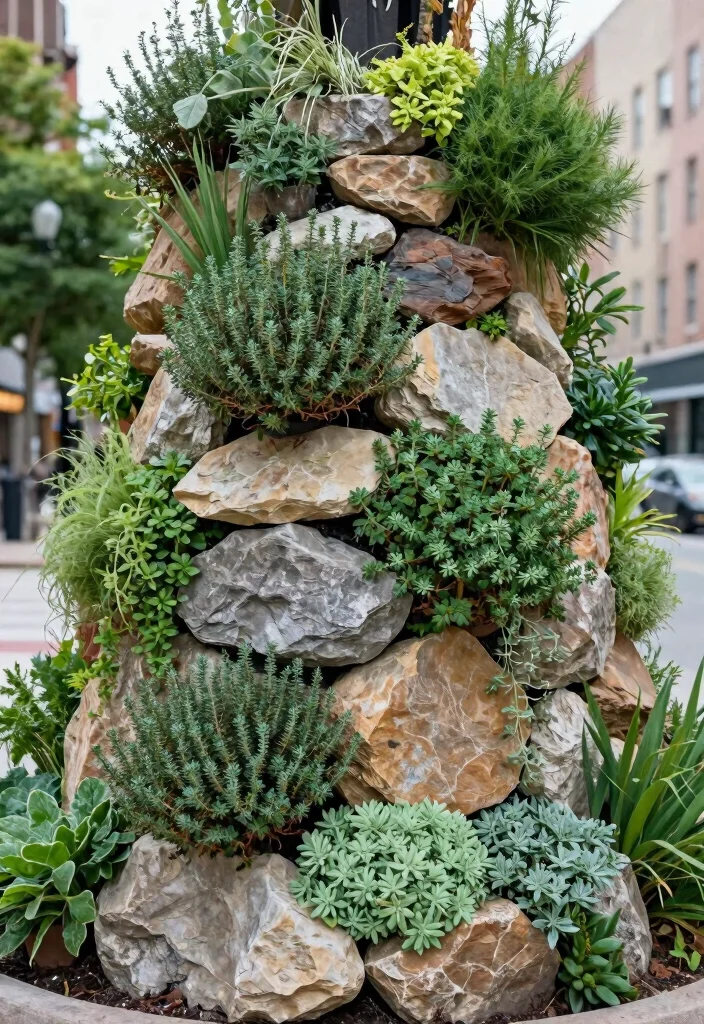
A vertical rock garden is an excellent solution to maximize small spaces while adding depth to your landscaping. This design is perfect for urban front yards, allowing you to showcase various drought-tolerant plants in an eye-catching vertical arrangement. Whether mounted on a wall or built with stacked stones, these gardens can provide lush greenery without excessive water demands.
Select a sunny location with ample support for the vertical structure. Utilize a mix of flat stones or vertical planters to create varying heights. Choose drought-tolerant plants like creeping thyme or sedum to ensure easy care. Make sure the vertical setup has proper drainage to prevent rot, and consider adding decorative stones or gravel at the base for enhancement.
Steps to create your vertical rock garden:
– Pick a sunny spot with support for vertical plants.
– Use a mix of stones or planters for height variation.
– Select drought-tolerant plants for easy maintenance.
– Ensure proper drainage within the structure.
– Add decorative stones for visual appeal.
This style not only minimizes maintenance but also brings vibrancy to urban settings where space is limited.
❝ Did you know? Vertical rock gardens can use up to 60% less water than traditional lawns, delivering front yard landscaping ideas with rocks that stay lush on a sunny wall. Start with a few stacked stones and drought-tolerant plants for instant curb appeal. ❞
9. Rock-Lined Border
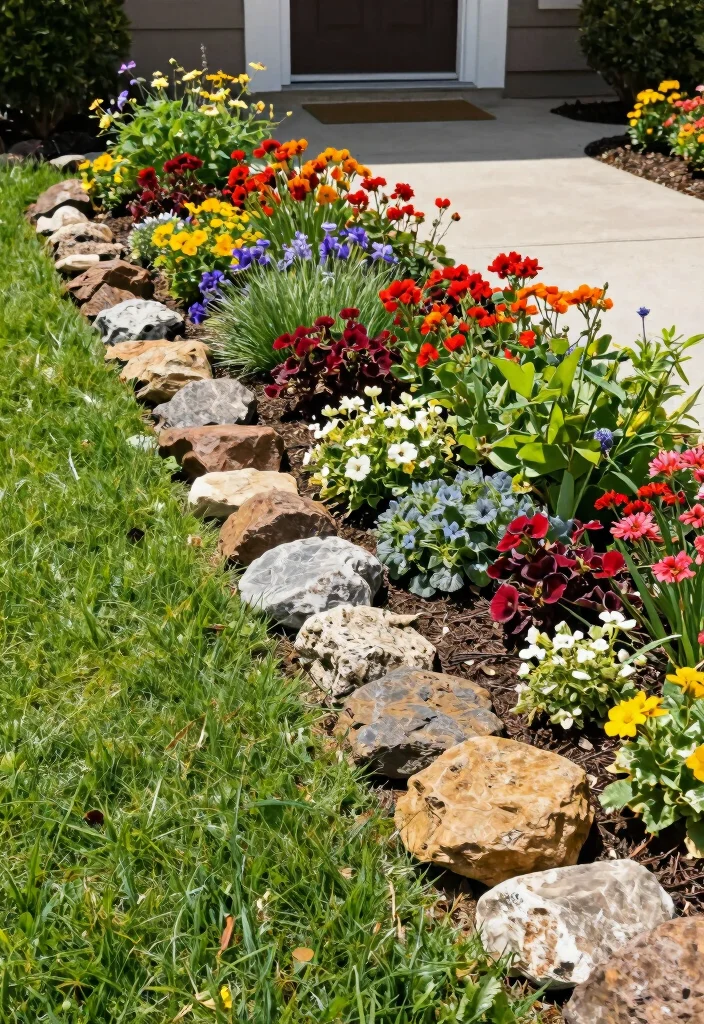
A rock-lined border is a straightforward yet effective way to define different areas in your front yard. This design can delineate garden beds, pathways, or separate your lawn from flower beds, all while ensuring easy maintenance. By selecting various sizes and types of rocks, you can create a unique border that adds charm and structure to your landscaping.
Start by choosing a range of rocks that harmonize with your home’s color scheme. Mark the areas you wish to define with stakes or string to keep your lines straight. Lay the rocks along the marked lines, ensuring they are stable. Fill any gaps with gravel or smaller stones for a polished finish, and consider planting drought-tolerant flowers behind the rocks for added color.
Key steps for your rock-lined border:
– Choose a variety of rocks that complement your home.
– Mark the areas to define using stakes.
– Lay rocks along the marked lines for stability.
– Fill gaps with gravel or smaller stones.
– Plant low-water flowers behind the rocks for texture.
This design not only beautifies your front yard but requires minimal upkeep while promoting sustainable gardening practices.
How To Choose the Right Rocks for Your Front Yard Landscaping
Choosing the right rocks for your front yard landscaping can greatly enhance your outdoor space while ensuring low maintenance and water conservation. Here are some key criteria to consider when selecting rocks for your project:
1. Size Matters
When it comes to rocks, size plays an essential role in both aesthetics and functionality. Larger boulders can create a dramatic focal point, while smaller stones are perfect for pathways or ground cover. Consider the scale of your front yard; if you have a small yard, opt for smaller stones to avoid overwhelming the space. Conversely, larger areas can benefit from bigger rocks that provide visual interest. Aim for a mix of sizes to create a natural look.
2. Material Type
Different types of rocks have unique characteristics that can impact your landscaping design. Common options include river rocks, granite, basalt, and limestone. River rocks are smooth and rounded and work well for dry creek beds or decorative accents. Granite is sturdy and ideal for retaining walls or boulder clusters. Basalt, with its dark color, can add drama, while limestone offers a lighter, more textured appearance. Research the properties of each material to ensure it aligns with your design vision.
3. Color Palette
The color of the rocks you choose can set the tone for your entire front yard. Neutral tones like gray, beige, and white blend seamlessly with most designs. If you want to make a statement, consider vibrant colors such as reds, greens, or blues. Think about the existing elements in your yard, such as plants and structures, to choose rocks that complement or contrast effectively. A cohesive color scheme can elevate the overall aesthetic of your landscaping.
4. Purpose and Functionality
Define the purpose of the rocks in your landscaping. Are they meant for decoration, creating borders, or serving a functional role like drainage? If you’re building a rock garden or dry creek bed, ensure the rocks facilitate water flow and soil retention. For pathways, choose flat stones that are easy to walk on. Knowing the function will help you select the right type and size of rocks for your needs, ensuring both beauty and practicality.
5. Budget Considerations
Your budget will ultimately influence your choice of rocks. Prices can vary widely based on the type, size, and sourcing of the stones. Local quarries or garden centers may offer better deals than specialty stores. Additionally, consider purchasing in bulk for potential savings. When budgeting, include costs for any necessary tools or supplies for installation, like edging materials or landscape fabric, to keep your project within your financial plan.
6. Local Climate and Environment
Consider your local climate when selecting rocks. Some stones retain heat and can be unsuitable for drought-tolerant plants, while others may absorb moisture and promote growth. Be mindful of the colors and materials you choose, as lighter stones reflect heat, and darker stones absorb it. This factor is especially crucial if you’re implementing xeriscaping ideas. Research native plants that will thrive in your environment alongside the rocks you select.
Pro Tip: Before making a final decision, visit a local supplier to see the rocks in person. Seeing the colors and sizes up close can help you better visualize how they’ll look in your front yard. Bring along samples of paint or materials from your home to ensure a good match with the overall design. This step can save you time and stress when planning your rock garden design.
10. Rock-Filled Planters
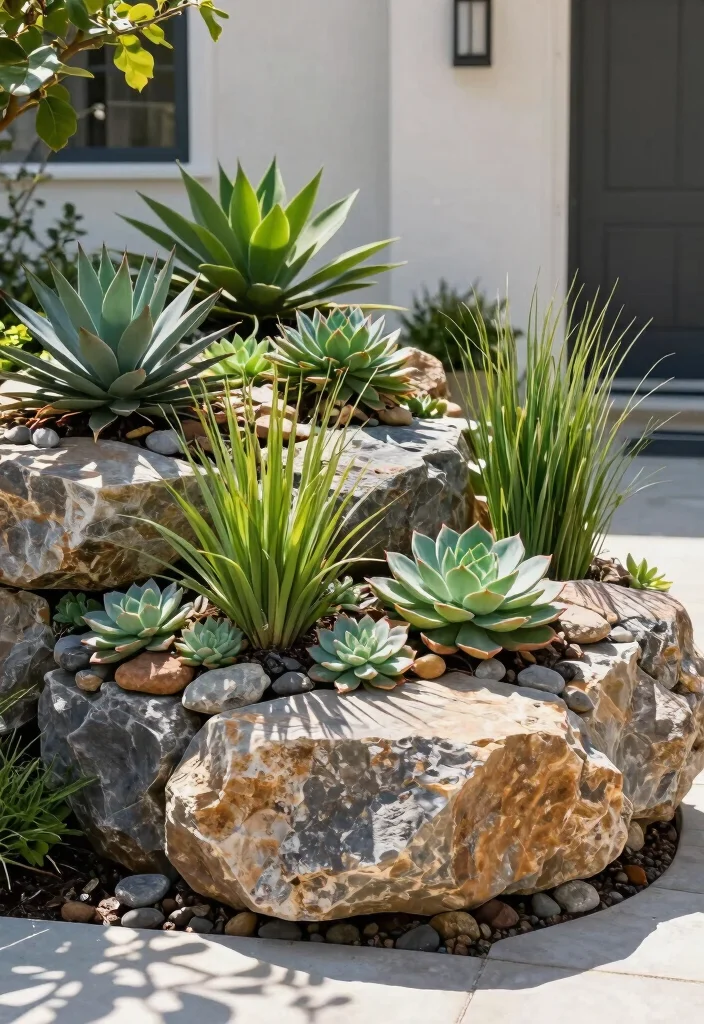
Rock-filled planters offer an innovative way to blend stones with greenery in your front yard. By using large planters filled with decorative rocks, you can create a low-water oasis that stands out as a stunning focal point. These planters are perfect for drought-tolerant plants, helping them thrive with minimal maintenance.
Select robust planters that can withstand outdoor conditions. Fill the bottom with larger rocks for drainage, preventing water accumulation. Layer smaller decorative stones on top for a beautiful finish, then plant drought-tolerant varieties like succulents or ornamental grasses to add visual interest. Remember to check the soil moisture periodically and adjust watering as necessary.
Steps to create your rock-filled planters:
– Choose sturdy outdoor planters for durability.
– Fill the bottom with larger rocks for drainage.
– Layer smaller stones for a decorative touch.
– Plant drought-tolerant varieties for easy care.
– Group several planters for a dramatic effect.
This idea not only serves as an attractive centerpiece but also promotes water efficiency in your garden.
11. Decorative Stone Features
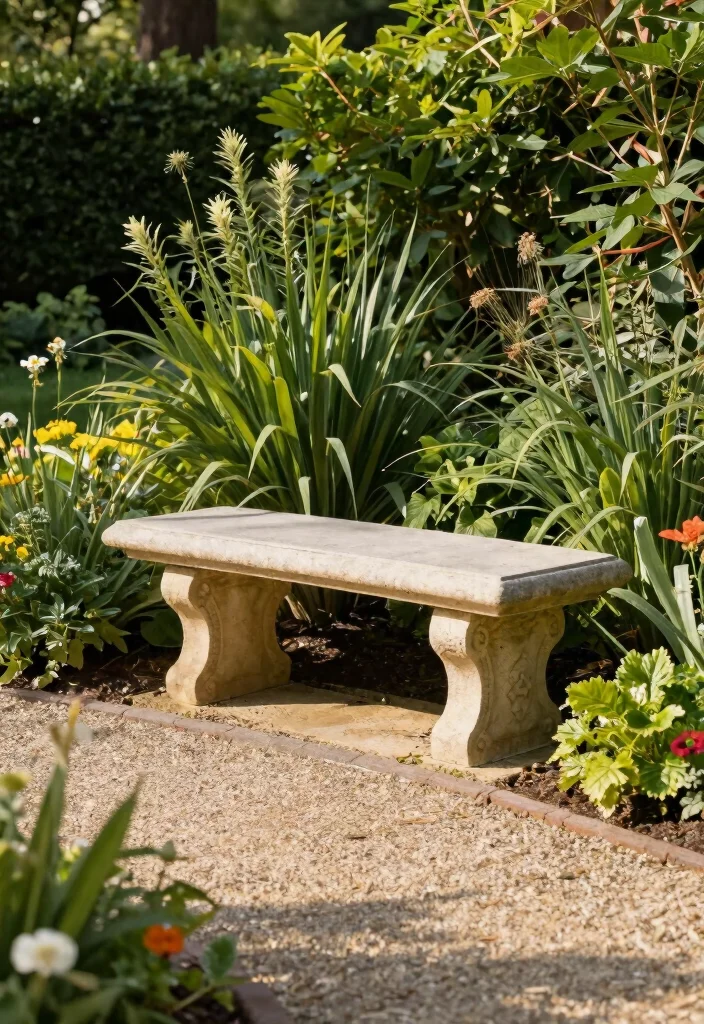
Integrating decorative stone features into your front yard can elevate your landscape design while keeping maintenance low. These features, such as stone sculptures, benches, or birdbaths, combine functionality with artistry, enhancing the visual appeal of your outdoor space. By placing these elements strategically, you create focal points that draw the eye and invite admiration.
Select decorative stones that harmonize with your home’s architectural style. Choose features that offer both beauty and practicality; a stone bench, for example, provides seating while adding character. Surround these features with low-water plants to enhance color and texture, and consider adding gravel or mulch for a clean finish.
Key steps for decorative stone features:
– Choose stones that complement your home’s style.
– Select functional features that enhance beauty.
– Surround features with low-water plants for added interest.
– Use gravel or mulch for a polished look.
This design not only reduces excessive watering but also creates an enriching and visually appealing environment for you to enjoy.
12. Rock Art in the Garden
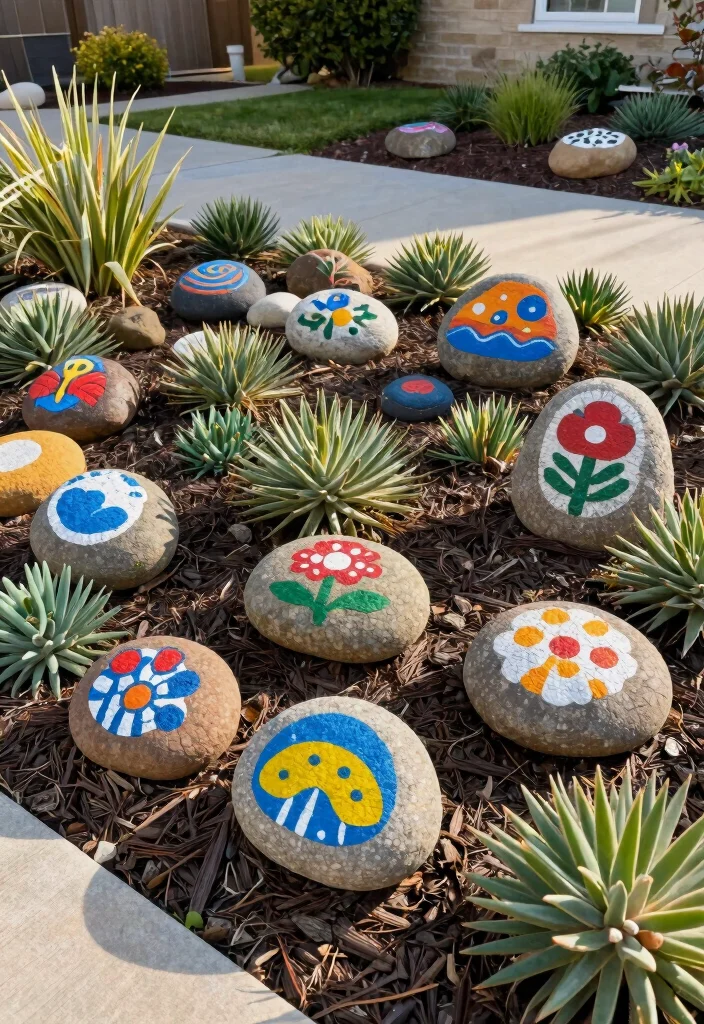
Incorporating rock art into your front yard can infuse your landscape with creativity and personality. Whether using painted stones, unique arrangements, or natural sculptures, rock art can serve as delightful conversation starters and playful accents. This idea allows you to express your artistic flair while promoting low-maintenance gardening practices.
Select rocks suitable for outdoor use that can withstand the elements. If you opt to create rock art, use non-toxic paint to ensure it’s environmentally friendly. Arrange the rocks in meaningful patterns or stacks to add whimsy to your design. Plant low-water flora around the art pieces to enhance the scenery, and encourage family members to participate in creating designs.
Steps for integrating rock art:
– Choose durable rocks for outdoor display.
– Use non-toxic paint for rock artworks.
– Arrange rocks in creative patterns for fun.
– Plant low-water plants around the art for enhancement.
This creative approach not only minimizes the need for watering but also showcases your unique style in your front yard.
Did you know? In front yard landscaping ideas with rocks, a small rock-art panel can slash irrigation needs by up to 40%. It also boosts curb appeal and gives neighbors something to talk about.
Conclusion
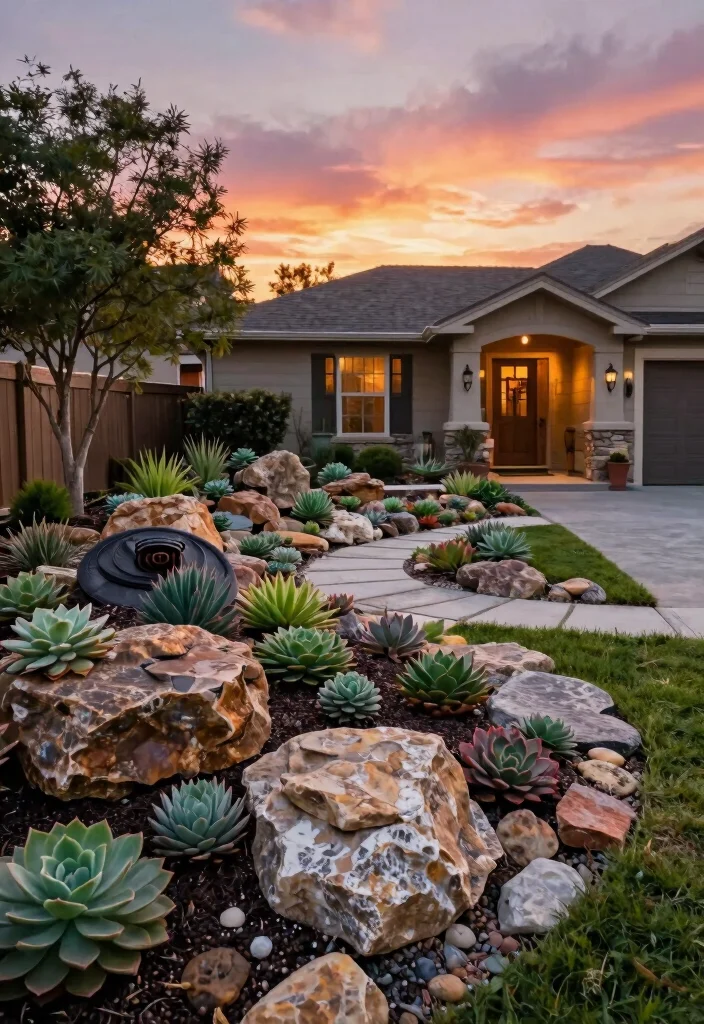
Your front yard is an extension of your creativity and personality, and these rock landscaping ideas can help you achieve a stunning, low-water design that flourishes with minimal upkeep. Transforming your outdoor space into a drought-tolerant paradise not only benefits the environment but also enhances your home’s curb appeal. Embrace these rock garden concepts to create a sustainable landscape that’s as beautiful as it is practical.
Now it’s time to roll up your sleeves and start your rock garden adventure!
Frequently Asked Questions
What are the best front yard landscaping ideas with rocks for a low-water, easy-care yard?
For front yard landscaping ideas with rocks that require minimal watering, start with a simple layout: large focal rocks, gravel or decomposed granite for paths, and a mulch-like ground cover to hold in moisture. Choose drought-tolerant plants such as agave, lavender, and sedums that thrive in sun, and place them in sweeping drifts to reduce irrigation needs. Group plants to mimic natural xeriscaping ideas and reduce maintenance, a core element of rock garden designs. Add a basic drip irrigation system or a rainwater-harvesting setup so you water only where needed. With rocks framing the space and drought-tolerant plants filling in, you get stylish, sustainable front yard landscaping ideas with rocks that are easy to care for.
How can I keep my front yard low maintenance while using rocks and drought-tolerant plants?
Keep things low maintenance by prioritizing structure over constant upkeep. Use rocks to create hardscape that cuts mowing and edging, then plant drought-tolerant plants in irregular curves to soften edges. Mulch beds with 2-3 inches to suppress weeds and conserve moisture. Choose native or well-adapted species like yarrow, thyme, or sedum that fit your sun exposure, which helps the xeriscaping ideas come to life. Install a drip irrigation system with a soil moisture sensor to water only when needed. Regularly remove weeds and check rock borders for displacement, but otherwise your front yard becomes a tidy example of low maintenance landscaping with rocks.
Which drought-tolerant plants pair well with rock garden designs in an urban front yard?
Pairing the rocks with the right drought-tolerant plants is key to vibrant rock garden designs in an urban front yard. Try bold textures like agave or yucca as anchor plants, softened by trailing sedum and creeping thyme. Add lavender or rosemary for scent and long-lasting color. Match plant choices to your sun exposure: sunny front yards love agave and lavender; shadier pockets can host echeveria or ornamental grasses. Group plants in drifts to reduce irrigation needs and create year-round interest—perfect for front yard landscaping ideas with rocks that stay bold with minimal care.
What maintenance tasks are essential for rock-based front yard designs to stay low water and easy to care for?
Focus on a simple routine: 1) check drip lines and adjust emitters so water goes exactly to roots; 2) refresh mulch every year or two to retain moisture and suppress weeds; 3) weed regularly and prune drought-tolerant perennials to maintain shape; 4) inspect rock borders and level any displaced stones after storms; 5) replace dead or unhappy plants with tougher drought-tolerant varieties; 6) ensure good drainage and avoid standing water; 7) clean paths as needed and check irrigation schedule. These steps keep your low maintenance landscaping with rocks looking sharp while embracing sustainable gardening practices.
What sustainable gardening practices should I follow when creating front yard landscaping ideas with rocks?
To make your front yard truly sustainable, lean into sustainable gardening practices that complement rocks. Start with xeriscaping ideas by selecting native or well-adapted, drought-tolerant plants and using rock garden designs that reduce lawn area. Harvest rainwater with barrels to feed your drip system, and use permeable surfaces to improve drainage and groundwater recharge. Build soils with compost and organic matter, mulch beds to conserve moisture, and avoid chemical-heavy fertilizers. Choose native pollinator-friendly plants and provide seasonal color through drought-tolerant blooms. This approach keeps front yard landscaping ideas with rocks eco-friendly and resilient, even in urban settings.