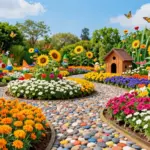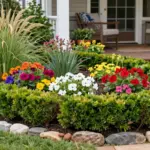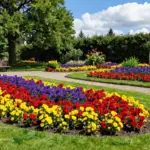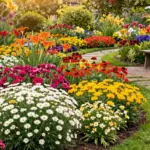
Creating a stunning garden can sometimes feel overwhelming. You may be dreaming about a space that not only looks beautiful but also handles drainage like a pro. River rock flower beds blend practicality with aesthetics, offering a unique solution for homeowners seeking low-maintenance options. That’s why I’ve put together this post—12 river rock flower bed ideas that will inspire you to transform your outdoor space.
If you’re someone who craves a garden that harmonizes with nature but doesn’t require constant upkeep, this guide is for you. Whether you’re a seasoned gardener or just starting, you’ll find captivating designs that incorporate river rocks and flowers. These ideas will help you create a vibrant, low-water landscape that stands out while ensuring proper drainage.
Get ready to dive into creative designs that are not just visually appealing but also functional. You’ll discover concepts that marry color and texture, making your garden both practical and picturesque. From elegant rock borders to artistic mosaic patterns, let’s explore how you can enhance your garden aesthetics with stones and flowers.
Key Takeaways
– Incorporate Drainage Solutions: River rocks allow water to flow through while preventing soil erosion, making them ideal for areas prone to puddling.
– Choose Low-Maintenance Plants: Pair your river rocks with drought-resistant flowers and plants to create a sustainable flower bed that thrives without constant attention.
– Utilize Color and Texture: Mixing rocks with vibrant flowers enhances visual contrast, making your flower beds pop while adding depth to your garden.
– Design Pathways: Use river rocks to create meandering pathways that connect flower beds, guiding visitors through your outdoor oasis.
– Experiment with Layering: Combining rocks with mulch or other materials can add texture and interest to your flower beds while improving water retention in the soil.
1. Desert Oasis: Succulent and Rock Combo
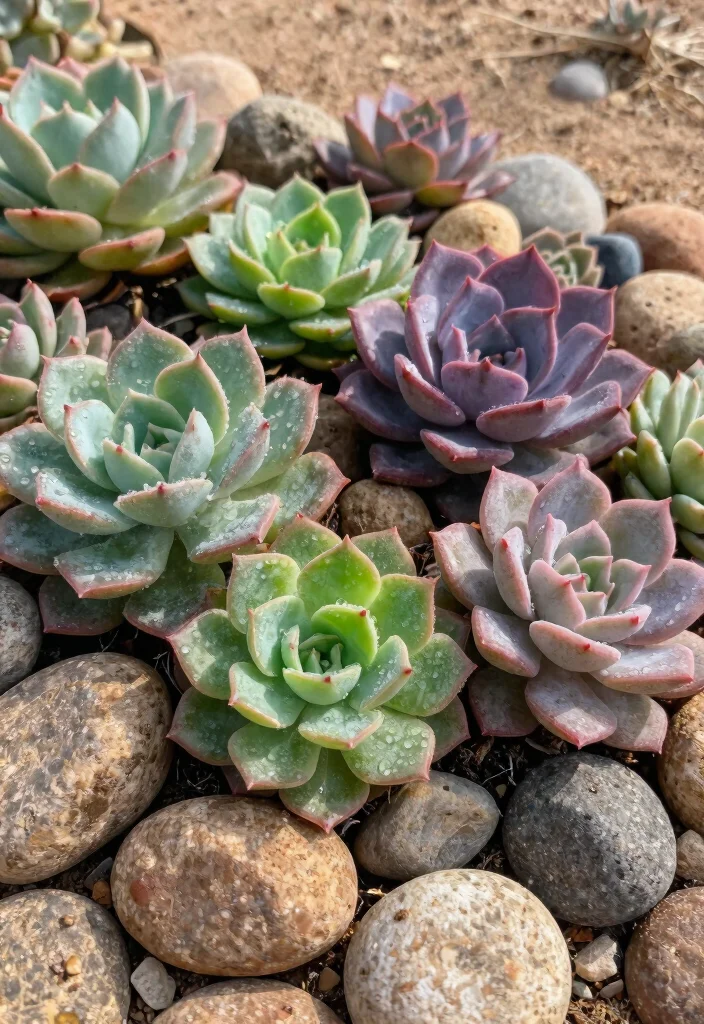
Are you dreaming of a vibrant garden that demands little maintenance? A combination of colorful succulents and smooth river rocks can transform your outdoor space into a stunning desert oasis. This design shines in arid climates, perfect for those who appreciate xeriscaping. With varieties like agaves, echeverias, and jade plants, you’ll enjoy eye-catching contrasts against the earthy tones of river rocks while conserving water.
Start by picking a sunny spot for your flower bed, as succulents thrive in bright light. Layer your rocks, placing larger ones at the back and smaller ones at the front for a dynamic look. Don’t forget to use organic mulch to retain moisture and enhance the visual appeal.
Key design tips:
– Select a sunny area for optimal growth
– Create a layered rock arrangement for depth
– Incorporate organic mulch for moisture retention
– Choose bright green succulents for stunning contrast
– Water sparingly to keep maintenance easy
This design not only beautifies your space but also offers a drought-resistant solution that is both attractive and low-maintenance.
2. Elegant Edging: River Rock Borders
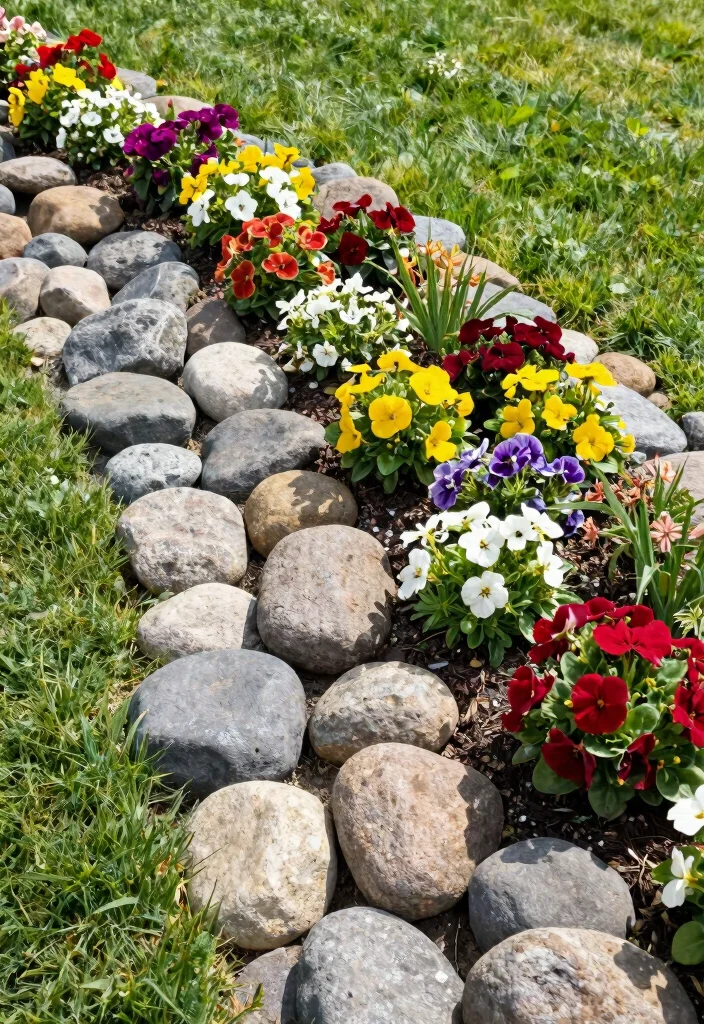
Looking for a neat and classic look in your garden? Using river rocks as edging can beautifully define your flower beds while enhancing drainage and preventing weeds. This elegant solution instantly elevates your garden’s appeal, combining functionality with style.
Begin by outlining your flower beds with a garden hose, shaping the desired curves before placing the rocks. Mixing various sizes of stones creates visual interest, while compacting them securely ensures they stay in place over time.
Steps to implement:
– Outline your flower beds with a garden hose
– Mix stone sizes for added texture
– Compact rocks securely to prevent shifting
– Place taller plants in the back for a layered effect
– Regularly check for weeds and adjust as needed
With river rock borders, you can create a polished garden aesthetic that makes your flower beds truly stand out.
3. Colorful Chaos: Mixed Flower and Stone Beds
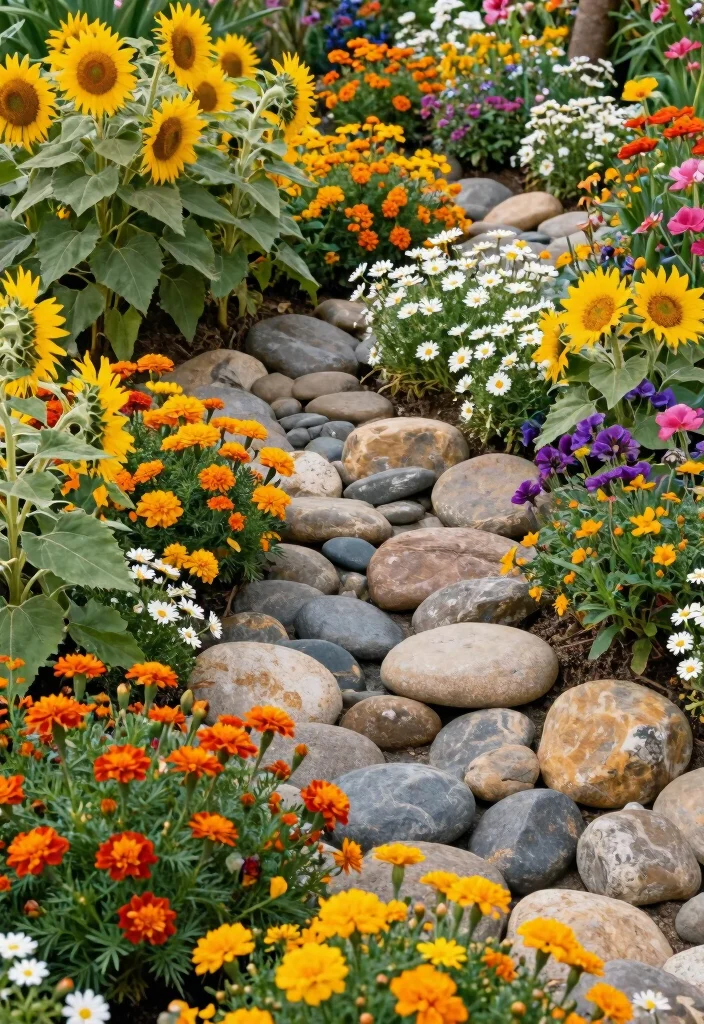
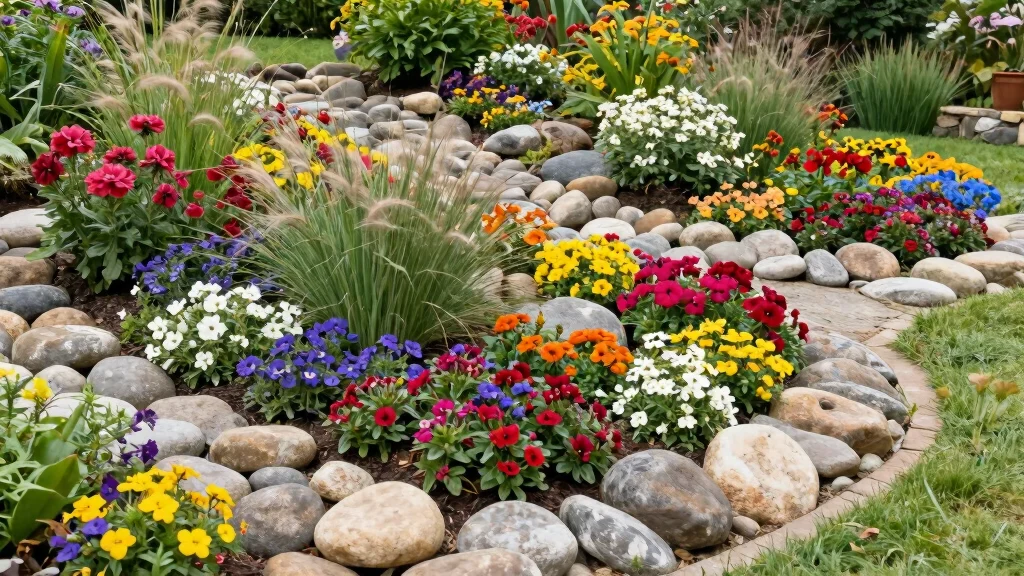
Do you love the idea of a lively, eclectic garden? Mixing various flower types with river rocks can create a dynamic flower bed that bursts with colors and textures. This approach celebrates nature’s diversity, making your garden a visual delight.
Select a variety of flowering plants with heights and colors that create maximum impact. Instead of strictly lining the edges with stones, scatter them throughout to enhance the vibrant blooms.
Consider these tips:
– Choose a mix of flowering plants for diversity
– Scatter river rocks throughout the bed for added charm
– Plant densely for a lush, filled look
– Incorporate seasonal blooms for year-round color
– Allow plants to grow freely for a wildflower appearance
This colorful chaos will not only add vibrancy to your garden but also improve drainage and decrease watering needs.
4. Serenity in Simplicity: Minimalist River Rock Beds
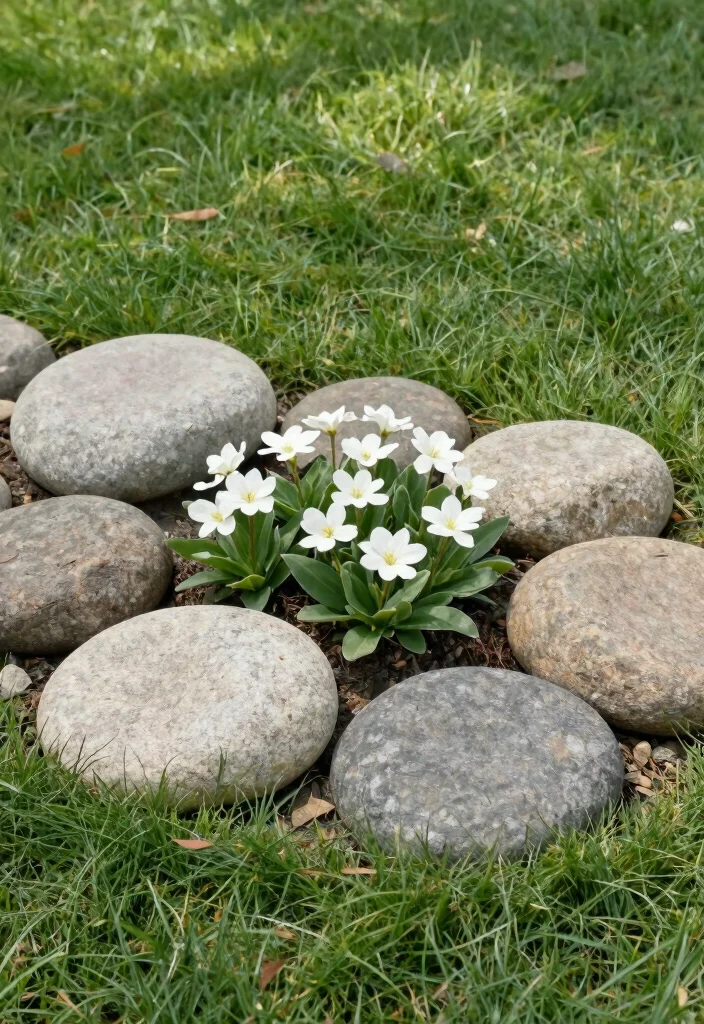
Do you appreciate clean lines and simplicity in your garden? A river rock flower bed perfectly embodies this minimalist aesthetic. By focusing on a few flower types and a monochromatic color scheme, you can create a serene space that invites relaxation.
Begin by selecting a limited color palette, sticking to one or two shades of flowers, like whites and greens. Use larger river rocks for a striking effect while maintaining a sense of calm.
Design tips:
– Stick to one or two flower colors for harmony
– Use larger rocks to create impact
– Limit plant variety to enhance tranquility
– Create negative spaces for balance
– Consider adding a focal point like a large rock or sculpture
This minimalist approach allows your plants and rocks to shine, creating a peaceful retreat that feels uncluttered and serene.
Did you know that a minimalist river rock bed with a two-color palette, like in river rock flower bed ideas, can cut maintenance time by up to 40%? Clean lines keep weeds at bay and your space serene with far less fiddling.
5. Vertical Beauty: Rock and Flower Stacks
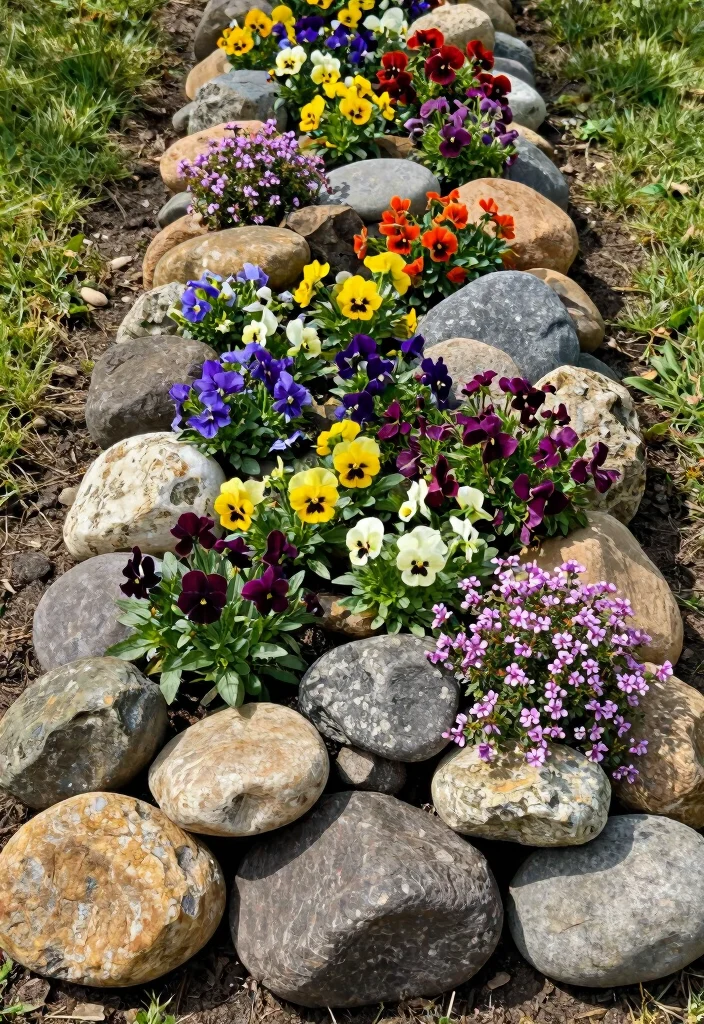
Want to add dimension to your garden? Stacking river rocks to create vertical flower beds introduces height and interest while ensuring excellent drainage. This design not only serves as a focal point but also maximizes space in smaller gardens.
Start with a sturdy base by ensuring the bottom layer of rocks is flat. Create varying heights with rocks to form levels for plants, adding depth and beauty.
Steps to build:
– Build a sturdy base with flat rocks
– Vary rock heights for dynamic levels
– Choose well-draining soil for plant health
– Incorporate colorful flowers like creeping thyme
– Water carefully to prevent pooling at the base
This vertical concept not only enhances your garden’s visual appeal but also allows for creative arrangements and unique designs.
6. River Rock Pathways: Connecting Flower Beds
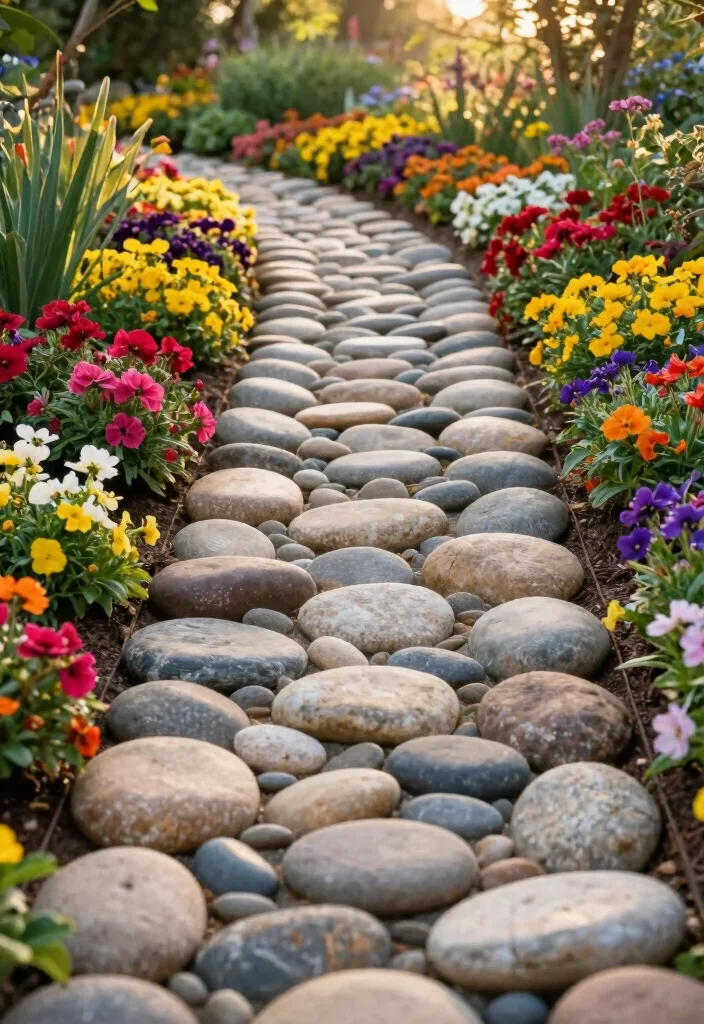
Do you want a functional yet beautiful garden layout? Designing pathways with river rocks can enhance both the aesthetics and usability of your garden. This natural transition between flower beds helps with drainage and creates a cozy walking path among the greenery.
Plan the pathway layout using stakes and string to outline your desired path. Excavate the area to create a flat base before laying down landscaping fabric that will prevent weeds from sprouting through the rocks.
Steps to create pathways:
– Outline the pathway layout with stakes and string
– Excavate to create a flat base
– Lay down landscaping fabric to block weeds
– Fill the path with river rocks for a snug surface
– Ensure smooth transitions between flower beds
By adding river rock pathways, you enhance the beauty of your garden while inviting exploration and connection between areas.
River rock pathways connect your flower beds—calming, practical, and pretty to look at. Outline the path with stakes and string, then lay fabric beneath to improve drainage and curb weed growth, a simple, effective piece of river rock flower bed ideas that ties the garden together.
How To Choose the Right River Rock for Your Flower Bed
When creating a beautiful river rock flower bed, selecting the right type of rock is essential. The right choice affects not only the aesthetics but also the drainage and overall health of your garden. Here’s how to make the best selection.
1. Size Matters
Consider the size of the river rocks you want to use. Larger stones can provide a dramatic look but may be harder to plant around. Smaller pebbles offer a softer, more subtle appearance, making them easier to work with for intricate designs. Aim for a mix of sizes if you want to create depth and texture in your flower bed.
2. Color and Texture
The color and texture of river rocks can significantly impact your flower bed’s visual appeal. Light-colored stones reflect sunlight and can brighten up darker areas. Conversely, darker stones absorb heat, which can be beneficial in cooler climates. Think about the colors of your flowers and how the rocks will complement or contrast with them.
3. Drainage Capabilities
Evaluate the drainage properties of the river rocks you choose. Good drainage is crucial for healthy plant growth. Opt for larger stones that allow water to flow easily through while preventing soil erosion. If you’re in a wetter area, consider using more porous rocks to help with drainage.
4. Source and Sustainability
Choose river rocks from reputable sources to ensure you are getting quality materials. Check if the stones are ethically sourced or if they have any harmful impacts on the environment. Sustainable options can often be found at local landscaping supply stores or from eco-friendly suppliers.
5. Budget Considerations
Your budget will also play a role in your choice of river rocks. Prices can vary significantly based on size, color, and source. Set a budget before you start shopping, and look for options that fit within your financial plan. If you’re on a tighter budget, consider mixing cheaper rocks with higher-end ones for a balanced look.
6. Future Maintenance
Think about how much maintenance you are willing to commit to. Some river rock arrangements may require more upkeep than others. If you want a low-maintenance flower bed, opt for larger, smooth stones that make it harder for weeds to grow. This will save you time and effort in the long run.
Pro Tip: Before making your final decision, visit a local garden center or stone supplier to see the rocks in person. This way, you can touch the stones, see how they look in different light conditions, and visualize how they will fit into your overall garden design. Taking a few samples home can also help you see how they complement your plants.
With these tips, you can confidently choose the right river rocks for your flower bed, ensuring both drainage and visual contrast in your garden. Happy gardening!
7. Artistic Arrangement: Mosaic Rock Patterns
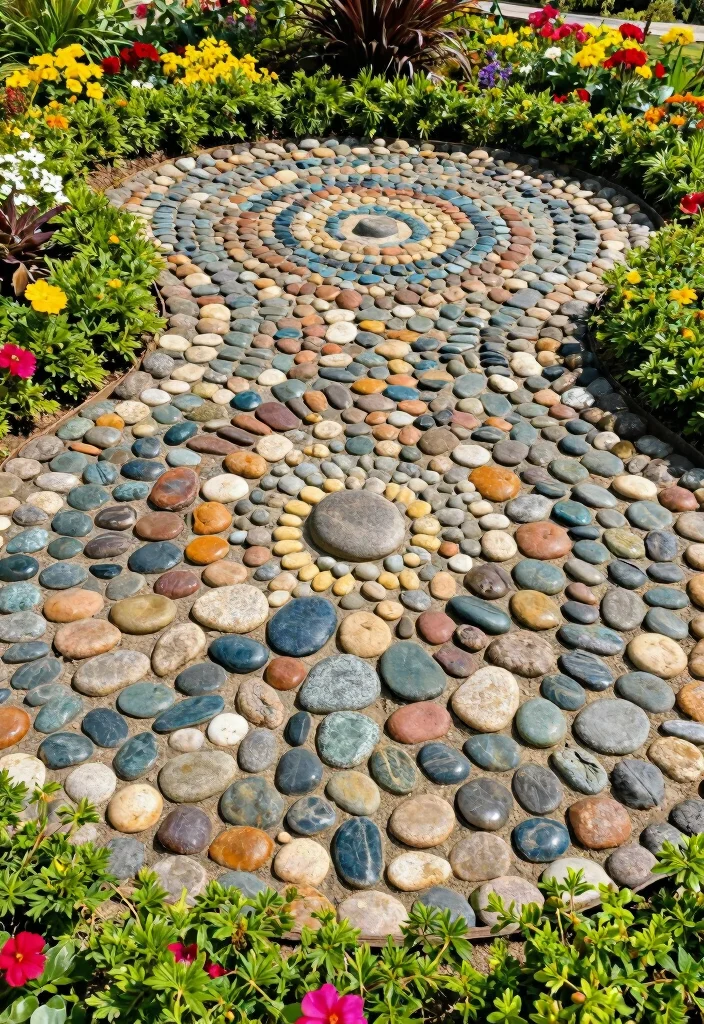
Are you ready to unleash your creativity in the garden? Designing mosaic patterns with river rocks allows you to play with colors and shapes, turning your outdoor space into a canvas of natural art. This artistic approach provides efficient drainage while showcasing your unique style.
Select various stone colors to create a captivating mosaic effect. Sketch your design on paper before laying the stones to simplify the process and achieve your vision.
Key design steps:
– Choose a mix of river rock colors for variety
– Plan your pattern on paper for guidance
– Use adhesive for intricate designs
– Mix with native plants for a harmonious look
– Regularly maintain to keep the design vibrant
This artistic touch not only enhances drainage but also serves as a conversation starter, showcasing your creativity in the garden.
8. Functional Habitat: River Rock Pockets
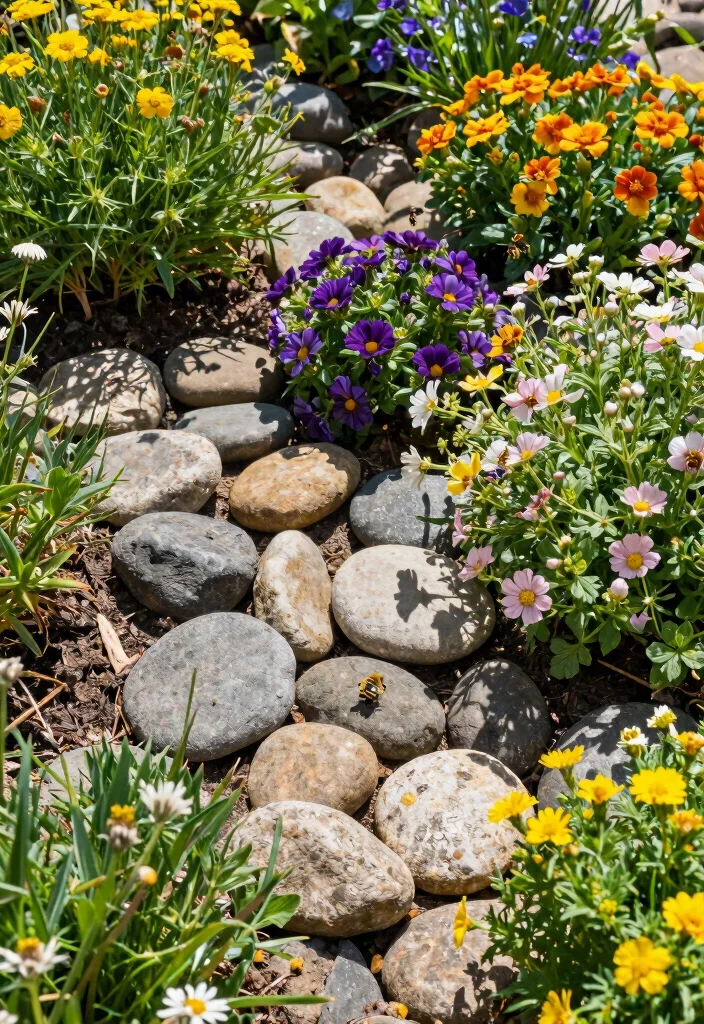
Want to create a thriving ecosystem in your garden? Incorporating river rock pockets can provide micro-habitats for beneficial insects, enriching your garden’s biodiversity. Strategically placed clusters of rocks offer shelter while beautifully complementing your flowers.
Select a mix of small and large rocks for visual interest. Position these pockets near flowering plants to attract pollinators and create a harmonious environment.
Steps to incorporate pockets:
– Use various rock sizes for visual appeal
– Place them near flowering plants
– Fill gaps with nutrient-rich soil
– Observe insect activity and adjust as needed
– Include native plants to enhance attraction
This functional habitat not only supports a healthy garden ecosystem but also adds an appealing touch to your flower beds.
9. Water-Wise: River Rock Xeriscaping
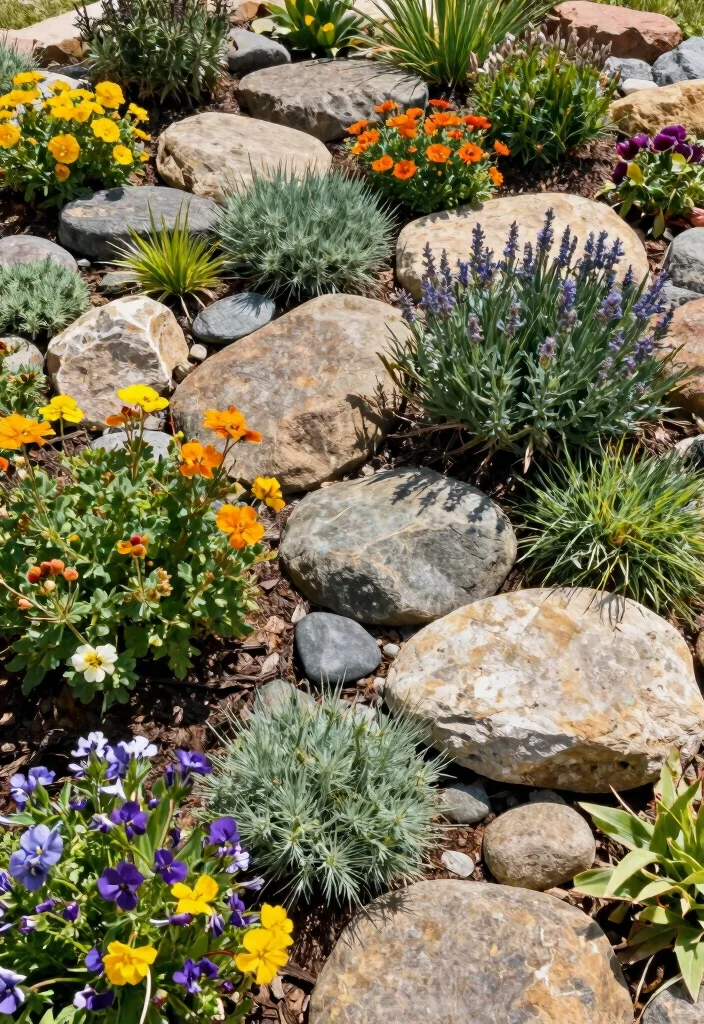
Facing drought conditions? A river rock xeriscape flower bed is an excellent solution to conserve water while showcasing beautiful blooms. This design emphasizes drought-resistant plants along with strategic rock arrangements for effective drainage.
Select drought-tolerant plants like lavender and ornamental grasses that thrive in dry conditions. Using river rocks in varying sizes enhances both stability and visual appeal in your garden.
Key implementation steps:
– Choose drought-resistant plants for sustainability
– Use rocks in different sizes for texture
– Shape flower beds to promote drainage
– Limit grassy areas to reduce water use
– Add organic mulch to retain soil moisture
With a water-wise river rock xeriscape, you can create a stunning garden that flourishes even in tough conditions.
10. Layered Textures: Combining Rocks with Mulch
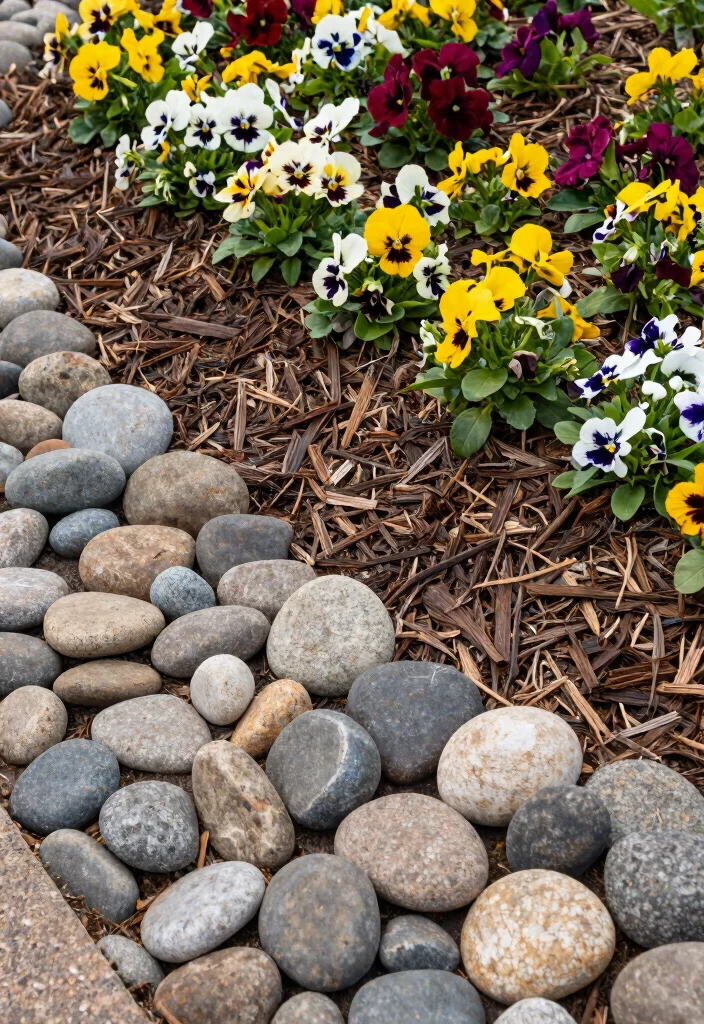
Looking for a striking contrast in your flower beds? Layering river rocks with organic mulch creates a beautiful mix of textures and colors. This design not only improves aesthetics but also enhances moisture retention and weed control.
Start with a base layer of quality river rocks to aid drainage. Then, add a thick layer of organic mulch on top to suppress weeds and support your plants.
Implementation tips:
– Select high-quality natural mulch for longevity
– Lay down rocks first for drainage
– Spread mulch evenly to ensure thickness
– Use rocks to define mulch edges for structure
– Monitor moisture levels to ensure plant health
This layered design results in a captivating flower bed that is both functional and visually stunning, enhancing your garden’s overall health.
11. Seasonal Shifts: Seasonal River Rock Arrangements
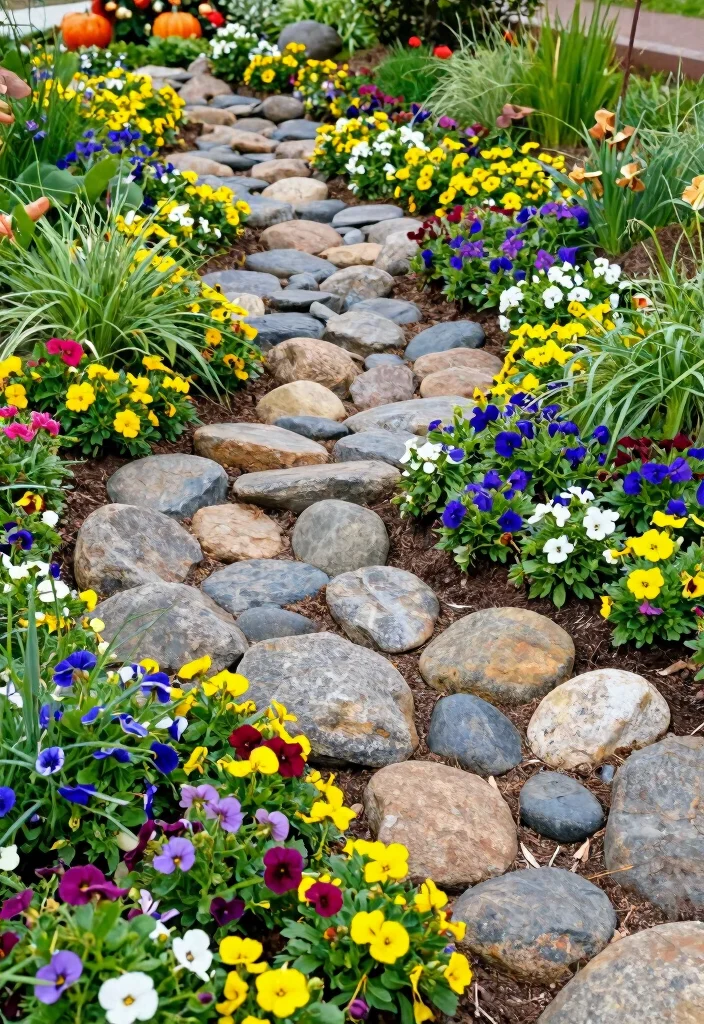
Want to keep your garden fresh and vibrant throughout the year? River rock flower beds can easily adapt to seasonal changes, creating a display that reflects the beauty of each season. By updating plant selections and rock arrangements, you can enjoy a garden that evolves beautifully.
Select plants that bloom at different times to ensure year-round interest. Changing the arrangement of rocks with the seasons adds a refreshing touch to your outdoor space.
Steps for seasonal arrangements:
– Choose plants with different bloom times
– Rearrange river rocks with the seasons
– Incorporate seasonal colors with annuals
– Add seasonal decor for a festive touch
– Monitor plant health and replace as needed
This seasonal shifting keeps your garden dynamic, providing ongoing beauty and interest while showcasing nature’s changing palette.
12. Natural Flow: Rippling River Rock Beds
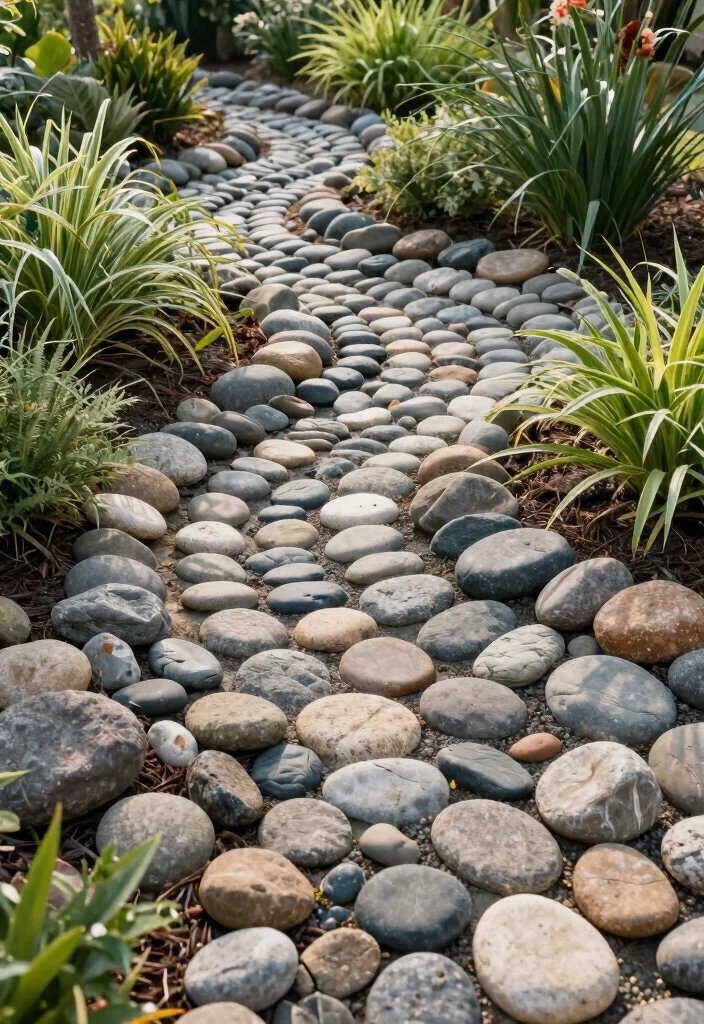
Do you want to add movement to your garden? Creating a rippling effect with river rocks can enhance the natural beauty of your flower beds. This design mimics the flow of water, giving your space an organic feel while inviting tranquility.
Arrange the rocks to imitate the flow of a river, focusing on gentle curves rather than straight lines for a natural look. Combine this with flowing plants that enhance the overall effect.
Key design steps:
– Visualize water movement when arranging rocks
– Incorporate soft curves for a natural appearance
– Select arching plants that complement the design
– Use taller plants in the center and shorter at the edges
– Ensure smooth pathways around the rippling beds
This rippling river rock bed design creates a serene and inviting landscape that adds to the overall tranquility of your garden.
Keep it simple: river rock flower bed ideas work best when you mimic a gentle stream. Curved, flowing placements with soft plants create ripples of movement and easy maintenance you’ll actually enjoy.
Conclusion: Embrace the Beauty of River Rock Flower Beds
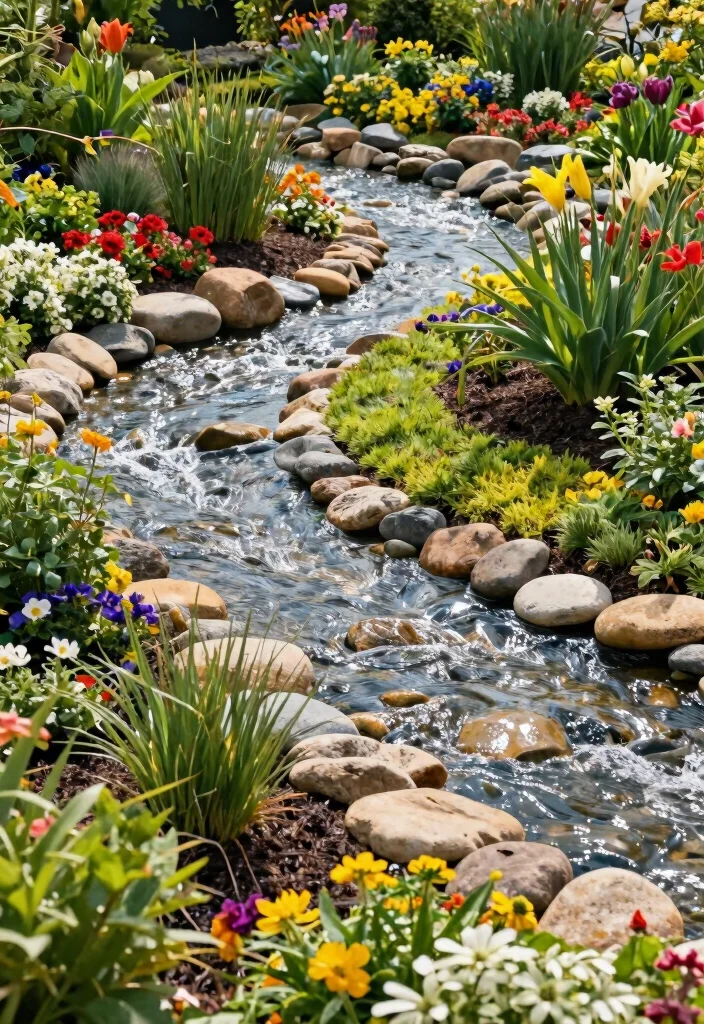
With these twelve river rock flower bed ideas, your garden can become a stunning showcase of natural beauty and functionality. Each design offers unique benefits, from improving drainage to enhancing visual contrast, making your outdoor space not only appealing but also practical. River rocks are a versatile addition, allowing for creativity while reducing maintenance needs.
So whether you opt for a minimalist design or a colorful mixed arrangement, embracing river rocks can bring life and texture to your garden. Let your imagination guide you as you create a beautiful, low-maintenance oasis that reflects your personal style and love for nature.
Frequently Asked Questions
What are some river rock flower bed ideas to improve drainage and visual appeal?
Try these river rock flower bed ideas to improve drainage and visual appeal. Start by evaluating your site’s drainage — does water pool after rain or drain away quickly? If drainage is poor, install a shallow swale or a gravel drainage layer beneath the soil. Lay down a weed barrier fabric to reduce weeds and help water move through. Add a 2-3 inch layer of river rocks (vary sizes for texture) in decorative patterns. Choose drought-tolerant perennials suitable for xeriscaping and give them space to grow. Use edging to keep rocks from spreading into lawn or paths. For long-term drainage, consider a French drain or a shallow trench with perforated pipe at the base. Regularly aerate the soil around plant roots and top up rocks every few years.
How can I design a low-maintenance river rock flower bed for xeriscaping?
Designing a low-maintenance setup starts with smart plant and rock choices. Pick drought-tolerant perennials or ornamental grasses that thrive with minimal water. Create a simple, layered rock layout using a mix of pebble-sized rocks and larger stones to reduce erosion and boost drainage. Install a drip irrigation system on a timer to minimize evaporation, and mulch around planting pockets to preserve moisture. Add a few shallow basins or pockets for seasonal color without creating extra work. This approach makes your river rock bed something you can enjoy without constant upkeep while keeping drainage solutions for gardens in mind.
What should I consider when using landscaping with river rocks for flower bed design ideas?
When planning landscaping with river rocks for flower bed design ideas, start with a cohesive color palette that complements your plants and surroundings. Vary rock sizes—from pebbles to larger fieldstones—to create texture and depth. Use edging to keep rocks contained and prevent spreading into pathways. Think about drainage: rivers rocks can channel water, but you may need strategic pockets or a shallow trench to boost drainage. Pair decorative rock gardens with low-maintenance, drought-tolerant plants for year-round appeal. This balance helps you achieve garden aesthetics with stones while maintaining a simple maintenance routine.
Which river rock sizes and layouts work best for garden aesthetics with stones and stable drainage?
Aim for a layered approach: combine small pebbles with mid-sized rocks for texture and one or two larger stones as focal points. This creates a natural, calligraphic flow that looks intentional and still allows soil to breathe. Place rocks to guide water toward root zones and create microhabitats for beneficial insects. Use a border or edging to keep stones from migrating into beds or lawns, which helps maintain drainage and appearance. This layout supports flower bed design ideas that are visually striking and practically effective for drainage.
What maintenance and drainage tips keep a decorative rock garden looking tidy without a lot of effort?
Keep it simple: top up rocks every few years to maintain the look of a decorative rock gardens setup, and pull weeds from between stones before they root deeply. Use a light layer of mulch near plantings to conserve moisture and reduce weed growth. Periodically rake the surface to prevent compacted soil from forming, which can hinder drainage solutions for gardens. Clean any algae or dirt buildup with a gentle brush or low-pressure wash. Regular inspections after heavy rains will help you adjust drainage channels and preserve garden aesthetics with stones long-term.