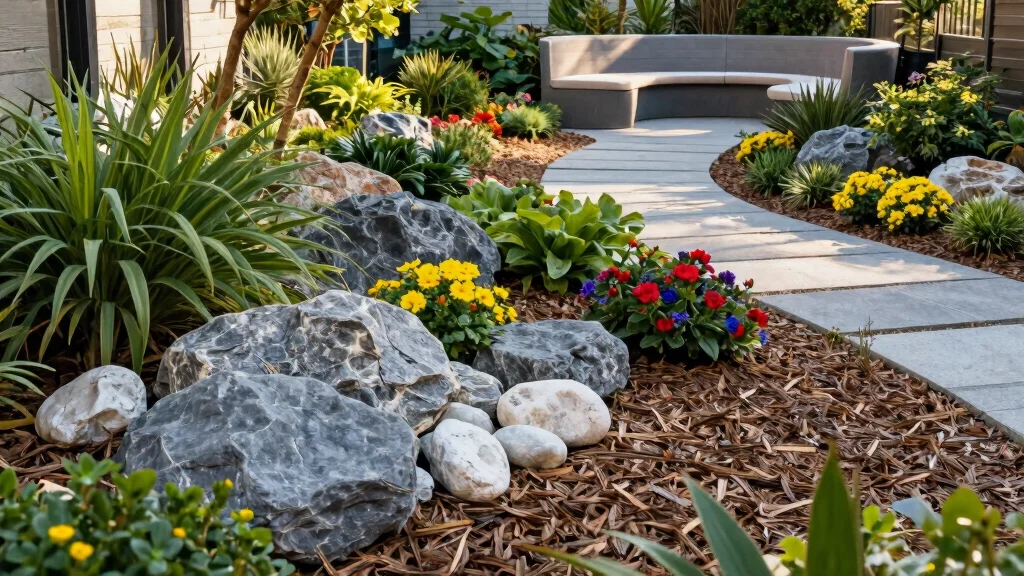
Creating an inviting outdoor space can feel daunting, especially for those of us navigating urban gardens with limited time and resources. I put this post together because I know how challenging it can be to achieve a beautiful and functional yard without endless maintenance. If you’re someone who craves a garden that showcases your personality while keeping the weeds at bay, you’ve landed in the right place.
In this post, I’m excited to share 12 rock and mulch landscaping ideas that not only look stunning but also promote low-maintenance beauty. From Japanese Zen gardens to colorful rock borders, you’ll discover designs that provide clean contrast and effective weed control. Whether you’re a novice gardener or a seasoned green thumb, these ideas will help you create a space that enhances your outdoor aesthetics while using durable landscaping materials. Let’s dig into these inspiring concepts!
Key Takeaways
– Diverse Options: Explore various rock and mulch landscaping ideas, each offering a unique aesthetic for urban gardens.
– Weed Control: Learn effective weed control techniques that ensure your garden remains tidy with minimal effort.
– Aesthetic Appeal: Understand how landscaping with rocks can create visually striking contrasts when paired with vibrant mulch.
– Durable Materials: Discover durable landscaping materials that not only stand the test of time but also enhance outdoor beauty.
– Practical Designs: Utilize practical designs like gravel pathways and rock gardens that boost the functionality of your space while looking great.
1. Japanese Zen Garden Inspiration
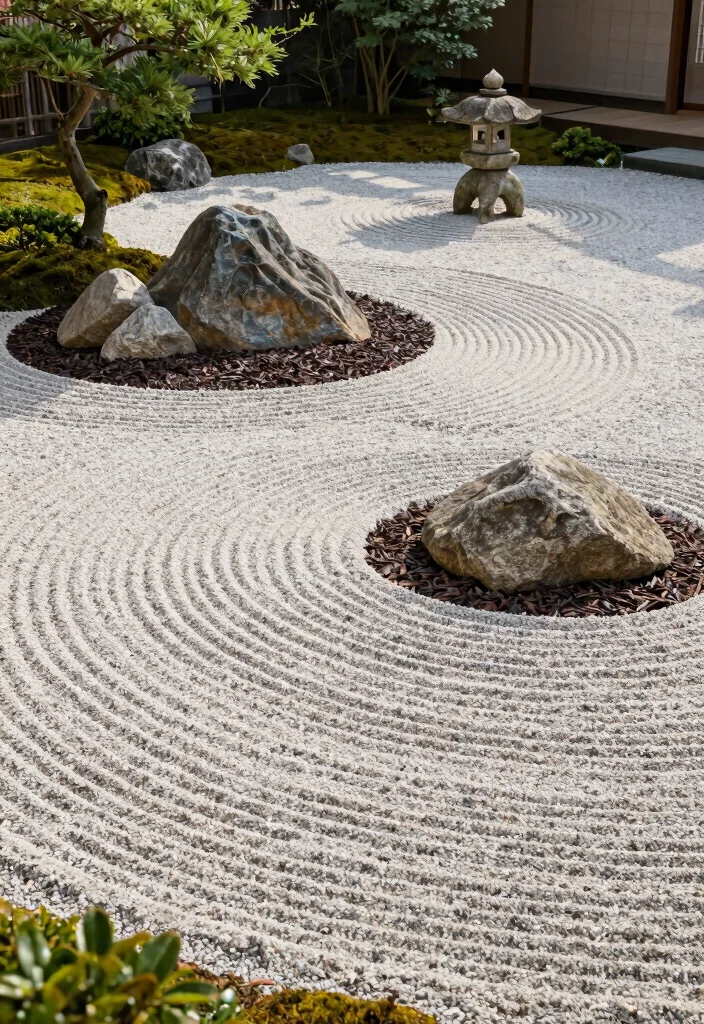
If you’re seeking a peaceful retreat in your garden, a Japanese Zen garden might be your answer. These gardens focus on simplicity and tranquility, making them ideal for urban spaces. By using fine pebbles or gravel as a base, you can create a calming landscape with strategically placed rocks that symbolize nature’s beauty. Raked patterns in the gravel add a rhythmic touch, enhancing the peaceful ambiance.
To elevate your Zen garden, consider mixing in dark mulch to contrast with lighter stones, which also helps suppress weeds effectively. Focus on creating a serene environment where you can unwind and reflect.
Key tips for creating a Zen garden:
– Select a quiet area for meditation.
– Use rocks of different sizes for visual interest.
– Limit colors for a clean and minimalistic design.
– Regularly rake the gravel to maintain its patterns.
This thoughtful design not only promotes mindfulness but also aids in effective weed control.
How To Choose Rock and Mulch for Your Landscaping
When considering rock and mulch for your landscaping project, you want to create a beautiful outdoor space while also managing weeds and maintenance. Here are some guidelines to help you select the right materials for your urban garden.
1. Purpose of Your Design
Before choosing materials, think about the purpose of your outdoor space. Are you aiming for a decorative addition, a functional pathway, or effective weed control? If you want to create a serene area, a Japanese Zen garden with rocks can be ideal. For weed control, a deep layer of mulch around trees can help suppress unwanted plants while keeping moisture in the soil.
2. Material Selection
Different types of rocks and mulches serve various needs. For example, gravel is great for pathways and drainage, while larger stones can create stunning focal points. On the other hand, organic mulches, like bark or wood chips, enrich the soil as they break down, while synthetic options like rubber mulch are durable but might not provide nutrients. Consider mixing materials for both aesthetics and functionality.
3. Color and Texture
Choose colors and textures that complement your home and garden style. Light-colored stones can create a clean, modern look, while dark mulches offer a rich contrast. Pay attention to the texture, too: smooth stones are more visually appealing in a Zen garden, while rougher textures might fit better in a rustic setting. Using contrasting colors can enhance your garden’s visual interest.
4. Size and Scale
Size matters when it comes to rocks and mulch. Small pebbles can work well in tight spaces, while larger boulders can serve as eye-catching centers in more expansive areas. Mulch should be applied in a layer of about 2-4 inches to effectively prevent weeds and retain moisture. Remember to scale your choices to the size of your garden. A smaller garden can get overwhelmed with large boulders.
5. Budget Consideration
Your budget will significantly influence your decisions. Some rocks and mulches can be expensive, while others, like shredded bark or gravel, are more affordable. Factor in delivery and installation costs if you’re purchasing in bulk. You might also want to consider DIY options for installation to save on labor costs. Keep an eye out for local sources of materials to reduce expenses.
6. Maintenance Requirements
Different materials come with various maintenance needs. Organic mulches may require replenishing every few years as they decompose, while rocks are relatively low-maintenance. If you want a truly low-maintenance option, consider durable mulch like rubber or gravels that don’t need replacing often. Assess how much time you can dedicate to upkeep before making your final selections.
Pro Tip: Before finalizing your choices, visit a local garden center to see the materials in person. This way, you can gauge their colors and textures better and even get helpful advice from experts. Visualizing how they will look in your space can make a big difference in your satisfaction with the final result!
2. Colorful Rock Borders
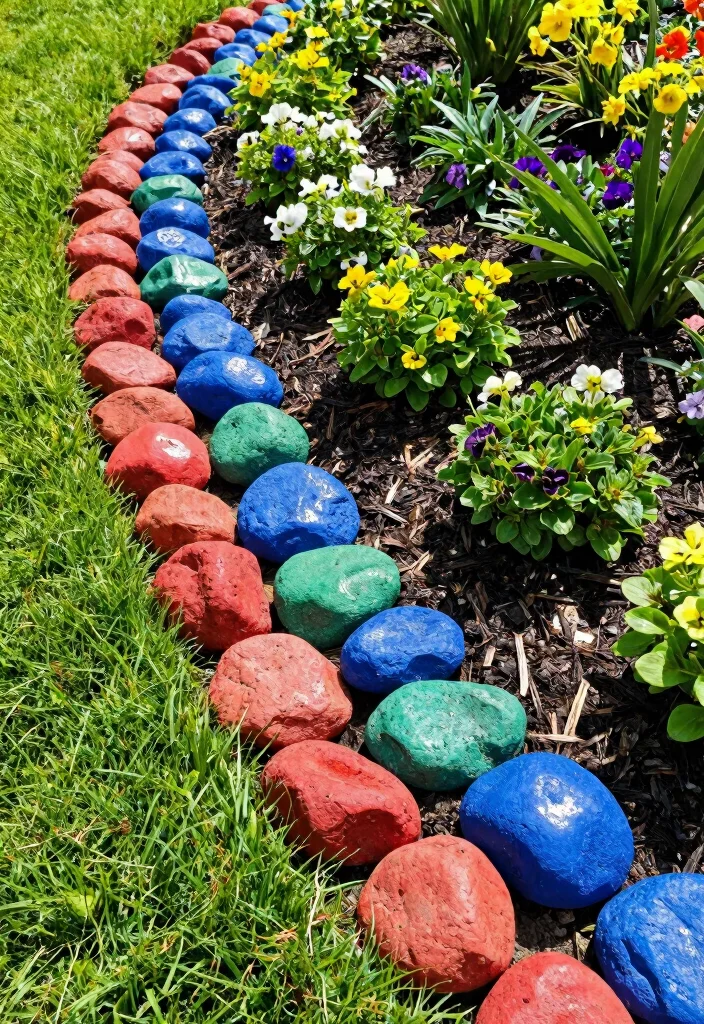
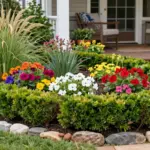
Are you looking to add a vibrant touch to your garden? Colorful rock borders can create a striking contrast around flower beds or pathways, bringing your landscape to life. By using a mix of stones in various shapes and hues, you can achieve a playful yet organized appearance. Brightly colored stones not only define spaces but also serve as a natural barrier against weeds.
To design with colorful rocks, think about creating patterns or clusters for added visual appeal. Make sure to ensure proper drainage to prevent water from pooling. Adding mulch inside these borders can further enhance plant growth while keeping undesirable weeds at bay.
Here’s how to start:
– Choose stones in diverse colors like reds, blues, and greens.
– Create eye-catching patterns for dynamic visuals.
– Ensure proper drainage to maintain healthy plants.
This design not only beautifies your garden but also keeps maintenance low and manageable.
3. Gravel Pathways
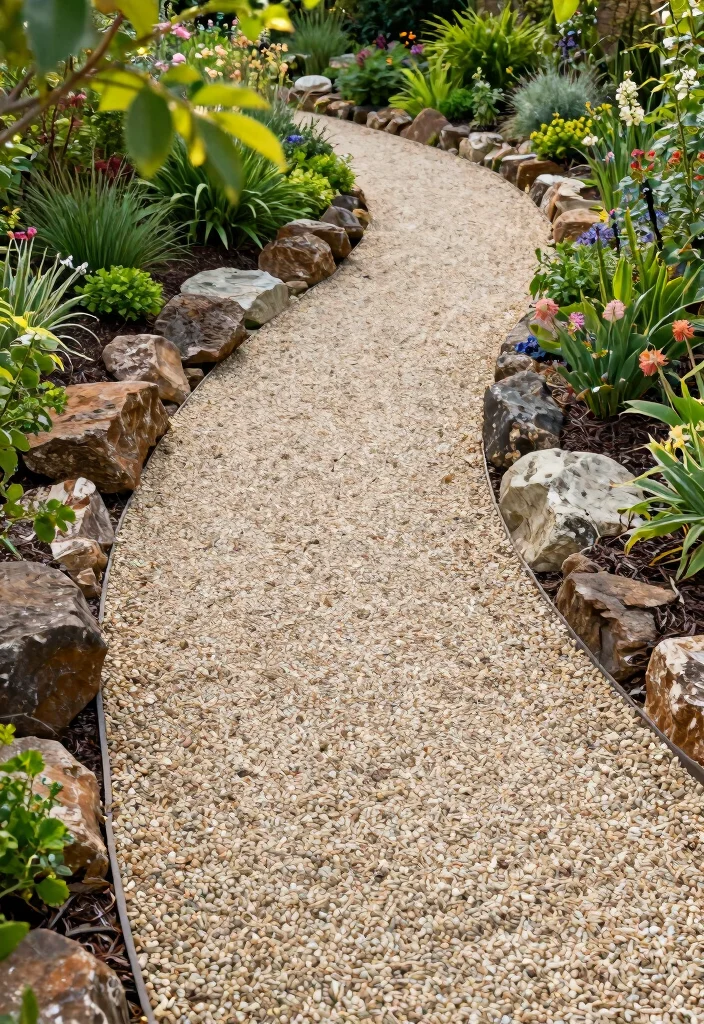
Gravel pathways are more than just functional; they can bring elegance to your garden while acting as a natural weed barrier. Selecting the right type of gravel, like crushed stone or decomposed granite, enhances both aesthetics and drainage. These pathways can be framed with mulch or larger rocks, creating an inviting and stylish look.
To create an effective gravel pathway, start by clearing the area and laying down landscape fabric to control weeds. Pour gravel evenly to your desired depth, and consider edging with stones or mulch for a polished finish.
Key steps to get started:
– Clear the area and lay landscape fabric.
– Evenly pour gravel to your desired depth.
– Edge with stones or mulch for a clean finish.
Gravel pathways not only look chic but also make navigating your garden easy and enjoyable.
4. Rock Gardens with Succulents
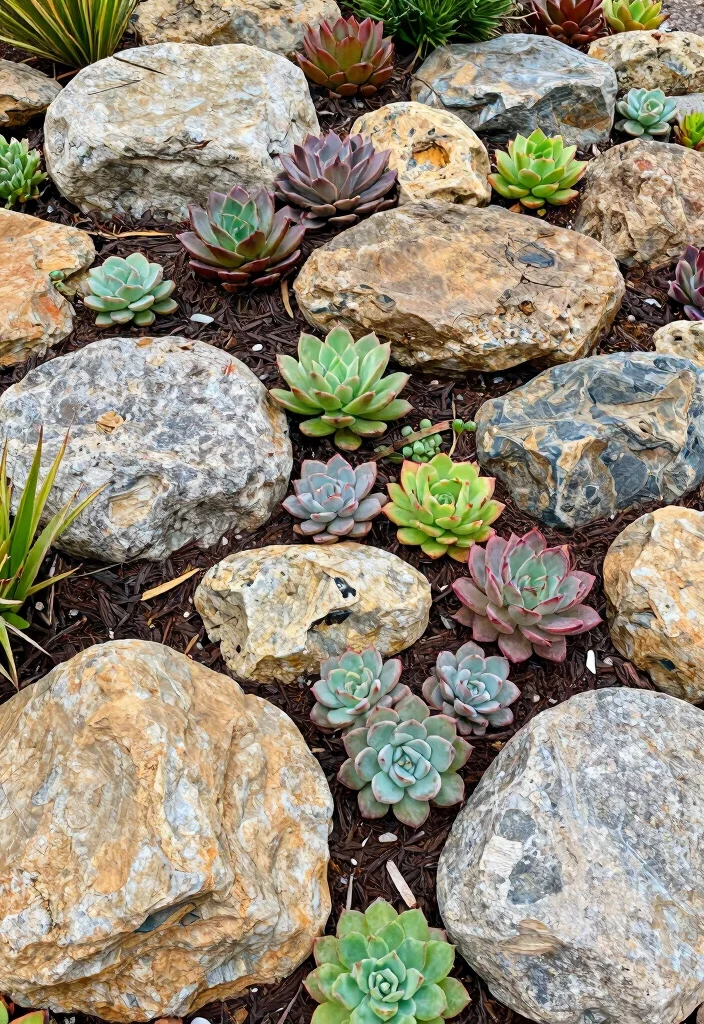
Want to add depth and texture to your landscape? Rock gardens paired with low-maintenance succulents are a fantastic choice. By using larger rocks as anchors and filling gaps with gravel and colorful succulents, you can create a modern and unique look that stands out. Adding mulch around the succulents helps retain moisture while controlling pesky weeds.
To create a stunning rock garden, choose a mix of rock sizes to keep things visually engaging. Select succulents that thrive in your climate for the best results. Arrange the rocks to mimic natural landscapes for an organic feel.
Here’s how to create your rock garden:
– Use various rock sizes for added interest.
– Select climate-appropriate succulents.
– Arrange rocks to mimic natural formations.
This approach requires minimal upkeep while showcasing nature’s beauty in a well-organized manner.
Did you know that rock and mulch landscaping ideas can slash maintenance by half? Create a rock garden with larger stones as anchors, fill gaps with gravel, and mulch around succulents to lock in moisture and deter weeds.
5. Mulch Around Trees
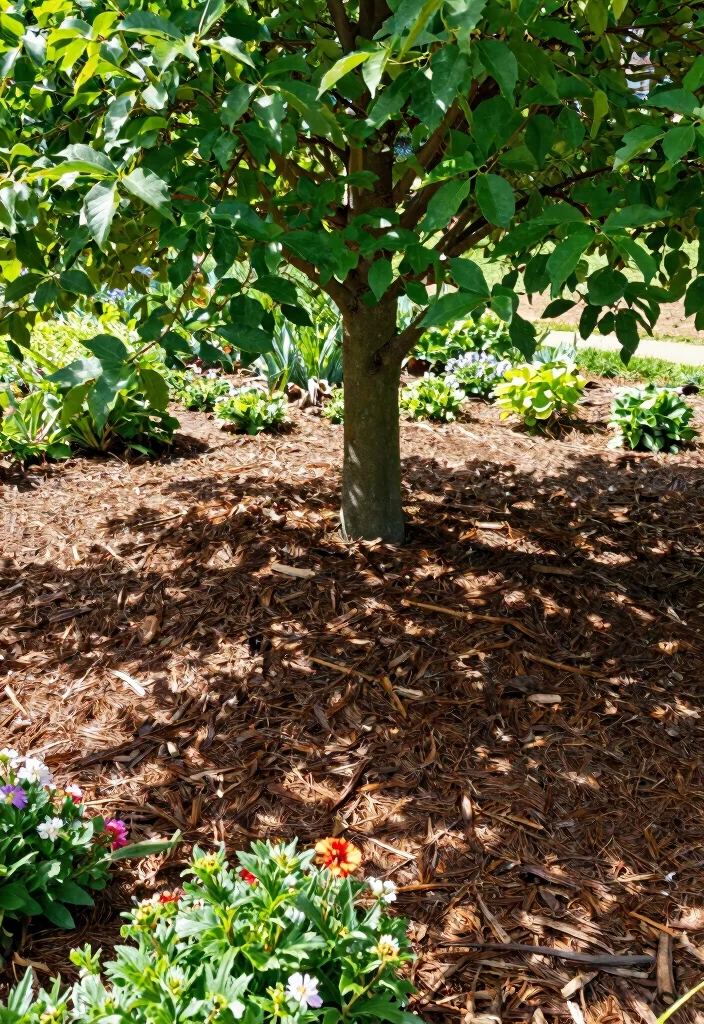
Mulching around trees is a simple yet effective way to enhance your garden’s health and aesthetics. A thick layer of organic mulch retains moisture, suppresses weed growth, and adds nutrients to the soil as it breaks down. This practice also helps maintain a consistent soil temperature, aiding your trees in thriving.
To mulch effectively, avoid piling mulch directly against the trunk to prevent rot. Select a type of mulch, such as bark or wood chips, that complements your garden’s look and replenish it annually for maximum benefits.
Tips for effective mulching:
– Keep mulch away from the trunk to prevent rot.
– Choose mulch that enhances your garden’s style.
– Replenish every year for continued effectiveness.
This method not only promotes tree health but also beautifies your outdoor space.
6. Rock Walls as Retaining Structures
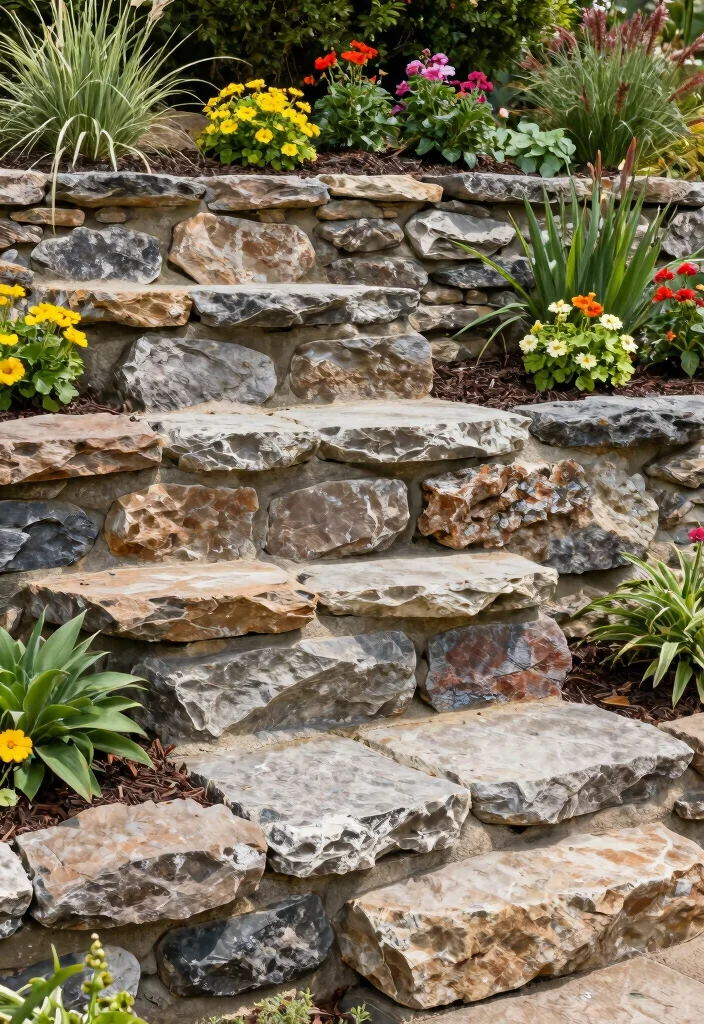
Rock walls can serve as both practical and decorative elements in your garden design. Whether you need a retaining wall for sloped properties or simply want to create a rustic feature, these walls add natural charm to your outdoor space. Pairing rock walls with mulch beds provides effective weed control while creating distinct planting areas.
When building a rock wall, consider using local stones for a cohesive look. Stacking stones without mortar gives it a rustic feel, and filling gaps with mulch or soil can accommodate plants beautifully.
Steps for building a rock wall:
– Use locally sourced stones for a natural appearance.
– Stack stones without mortar for a rustic effect.
– Fill gaps with mulch or soil for planting.
Rock walls help manage soil erosion while adding unique levels to your landscape design.
7. Decorative Stone Fountains
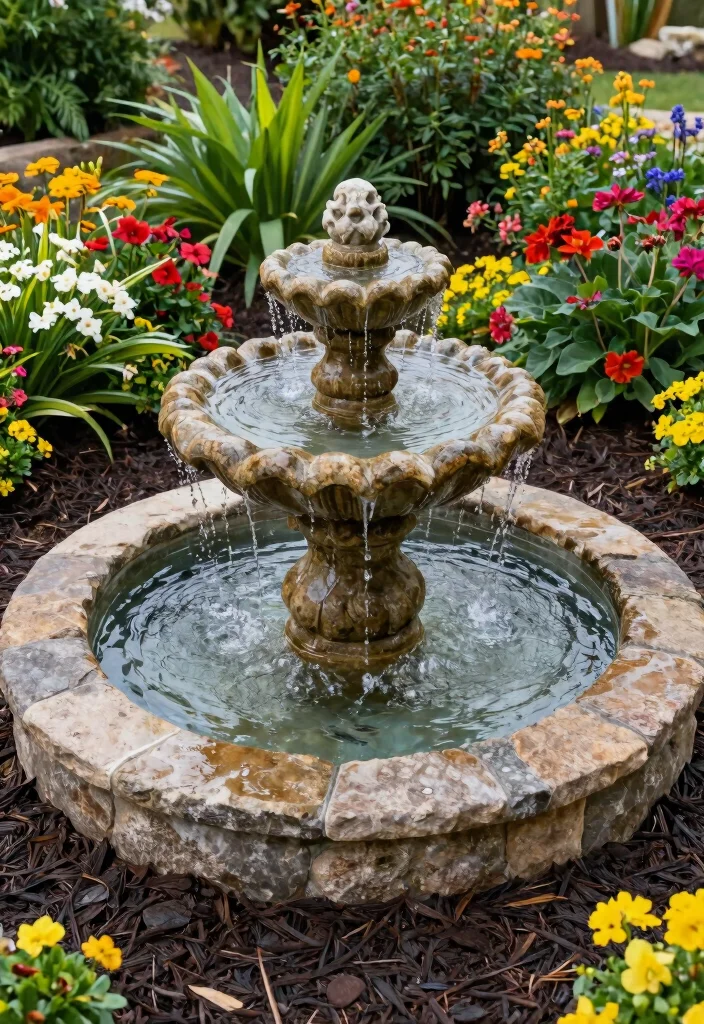
Looking to create a tranquil oasis in your garden? A decorative stone fountain can be the perfect centerpiece. The soothing sound of flowing water enhances relaxation, while carefully arranged rocks around the fountain provide a natural aesthetic. Mulching nearby not only elevates the visual appeal but also helps control weeds and retain moisture.
When installing a stone fountain, choose a style that complements your garden’s overall design. Utilize local stones for a cohesive look and surround the fountain with mulch and plants to enhance beauty.
How to install a stone fountain:
– Select a fountain style that fits your garden design.
– Use local stones for an integrated appearance.
– Surround with mulch and plants for added charm.
This addition not only beautifies your space but also creates a serene environment, perfect for unwinding and enjoying nature.
8. Mulch Paths with Stone Edging
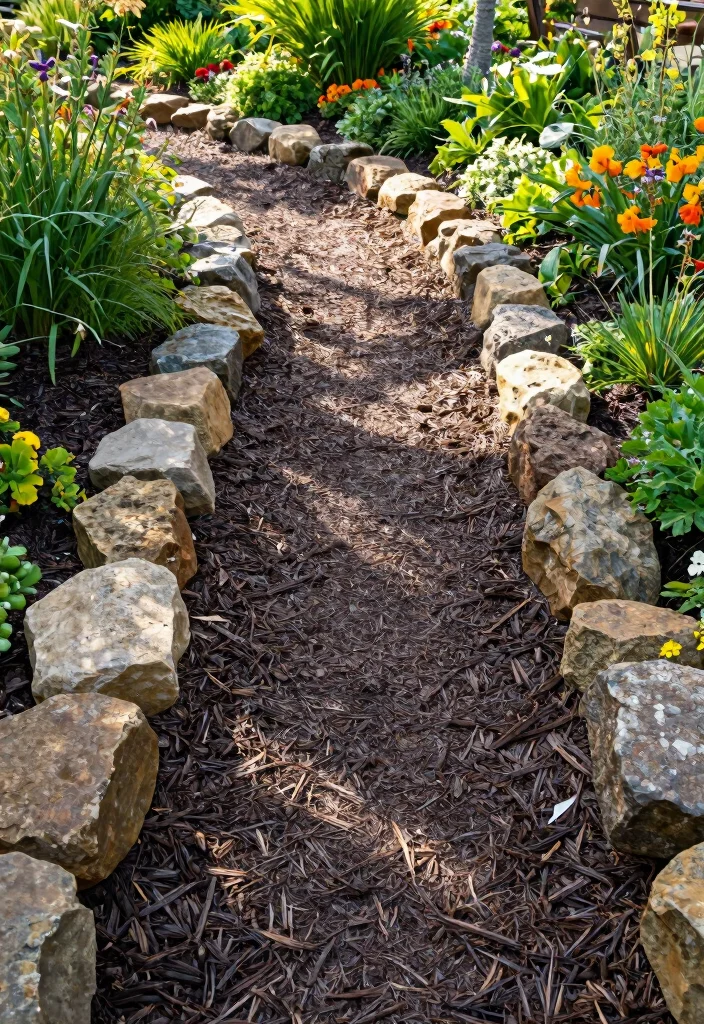
Creating mulch paths bordered by stones can offer a structured yet organic look in your garden. Using larger stones to outline the mulch areas helps define spaces, keeping everything tidy. This design simplifies maintenance, making it easier to control weeds and keep your garden pristine.
To create mulch paths with stone edging, start by laying down landscape fabric to suppress weeds effectively. Fill the area with your chosen mulch type, then place stones along the edges for a finished, clean appearance.
Steps to create this design:
– Lay down landscape fabric to prevent weeds.
– Fill with your preferred mulch type.
– Position stones along edges for a neat look.
This method combines practicality and beauty, ensuring your garden looks great with minimal effort.
Fun fact: Mulch paths bordered with stones can cut weed maintenance by up to 60% in urban gardens. In rock and mulch landscaping ideas, laying landscape fabric first and edging with larger stones keeps spaces tidy and easy to manage.
9. Xeriscaping with Rocks and Mulch
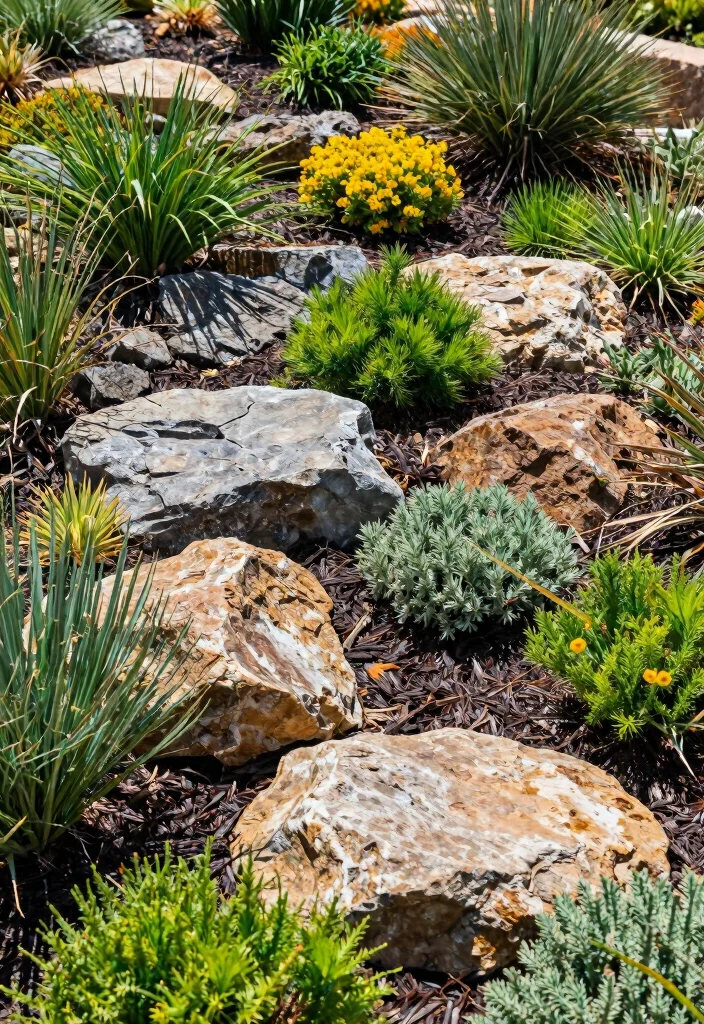
Xeriscaping is an ideal choice for creating a low-water garden, especially in urban areas where water conservation is vital. This landscaping technique uses drought-resistant plants, rocks, and mulch to craft a sustainable environment. By combining these elements, you can conserve moisture and reduce weed growth, simplifying maintenance.
To design a xeriscape garden, select native plants that require minimal watering. Incorporate a variety of rock sizes for texture, and use mulch to keep moisture in and weeds out.
Steps for designing your xeriscape:
– Choose native plants for low irrigation needs.
– Use a mix of rock sizes for added texture.
– Apply mulch for moisture retention and weed suppression.
This approach not only creates a stunning garden but also promotes a sustainable lifestyle by conserving water.
Fun fact: Xeriscaping can cut watering needs by up to 60% in hot climates. Pair drought-tolerant plants with layered rocks and mulch to trap moisture and cut weed growth—perfect for compact urban gardens.
10. Layered Rock and Mulch Designs
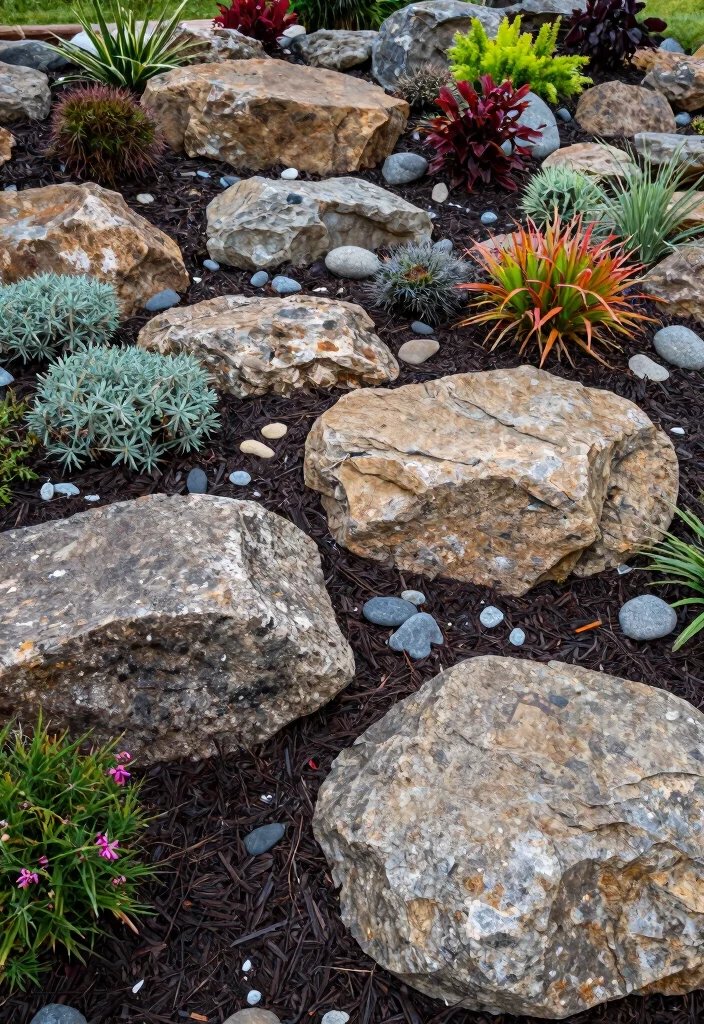
Layering different types of rocks and mulch can create a visually striking landscape that captures attention. Use large boulders as focal points, then fill in with smaller stones and mulch to achieve a polished finish. This technique adds depth and interest to your garden, while also helping with weed control.
To create layered designs, start with larger rocks as your foundation. Add smaller stones and mulch for contrast, and consider incorporating plants to soften the overall look.
Steps to create layered designs:
– Begin with larger rocks as your base.
– Fill in with smaller stones and mulch for diversity.
– Add plants to create a natural appearance.
This method enhances your garden’s beauty while ensuring it remains organized and low-maintenance.
11. Edible Gardens with Mulch and Rocks
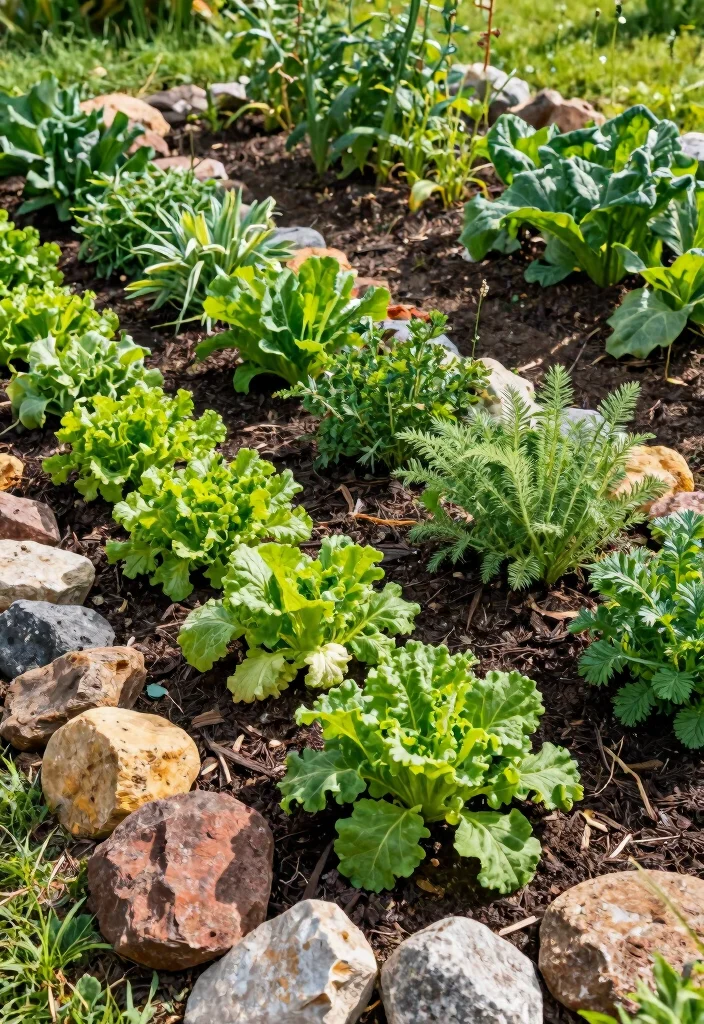
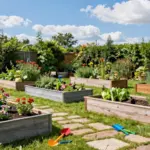
Creating an edible garden with mulch and rocks merges beauty with functionality. Rock borders can define your planting areas, while mulch protects the soil and helps retain moisture for your vegetables and herbs. This combination not only keeps weeds at bay but also adds a neat and tidy aesthetic to your garden.
To design your edible garden, plan the layout for easy access to your plants. Choose rocks that blend harmoniously with your garden style, and use organic mulch around your plants for added nutrition and moisture retention.
Tips for creating an edible garden:
– Plan layout for easy access to plants.
– Select rocks that fit your garden’s theme.
– Use organic mulch for added nutrition.
An edible garden can be both practical and beautiful, transforming your outdoor space into a productive haven.
12. Seasonal Rock and Mulch Displays
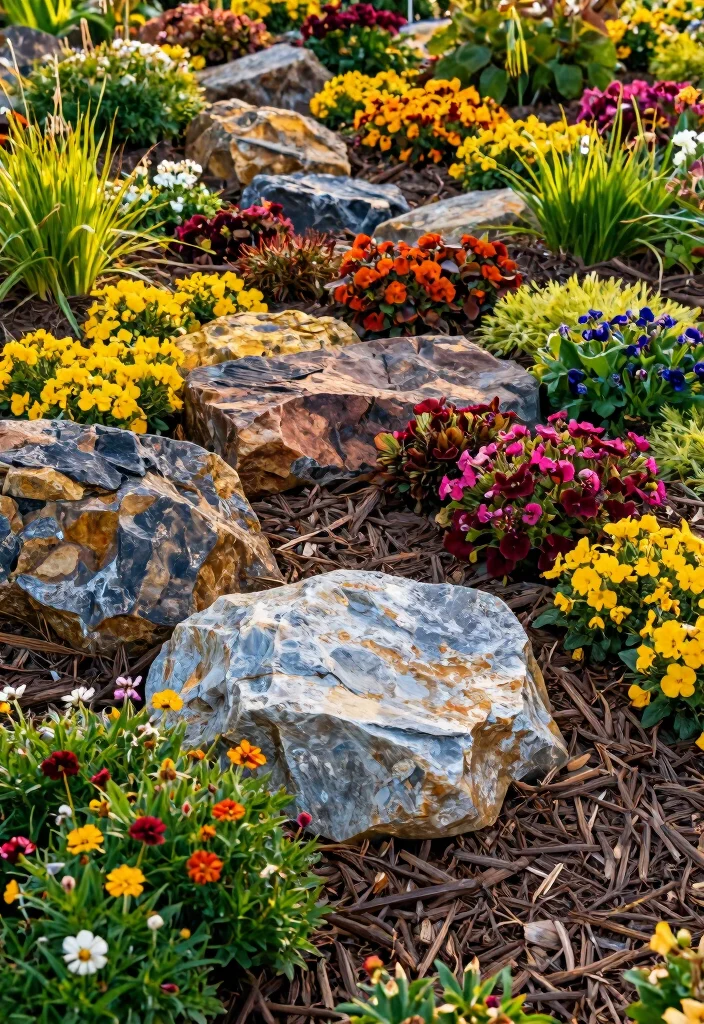
Refreshing your rock and mulch arrangements with the seasons keeps your garden vibrant and engaging. Incorporating seasonal elements, such as colored stones or themed mulch, can add a fun twist to your landscape. This approach allows you to evolve your garden continuously, preventing it from feeling static.
To maintain seasonal displays, choose plantings that complement your rock and mulch selections. Change stone colors or patterns to reflect the season, and keep up with regular maintenance for a polished appearance.
Tips for seasonal displays:
– Use seasonal plants that match your design.
– Change stone colors or patterns seasonally.
– Regularly maintain your garden for a fresh look.
This seasonal approach not only enhances your garden’s beauty but also keeps your gardening experience exciting all year round.
Conclusion
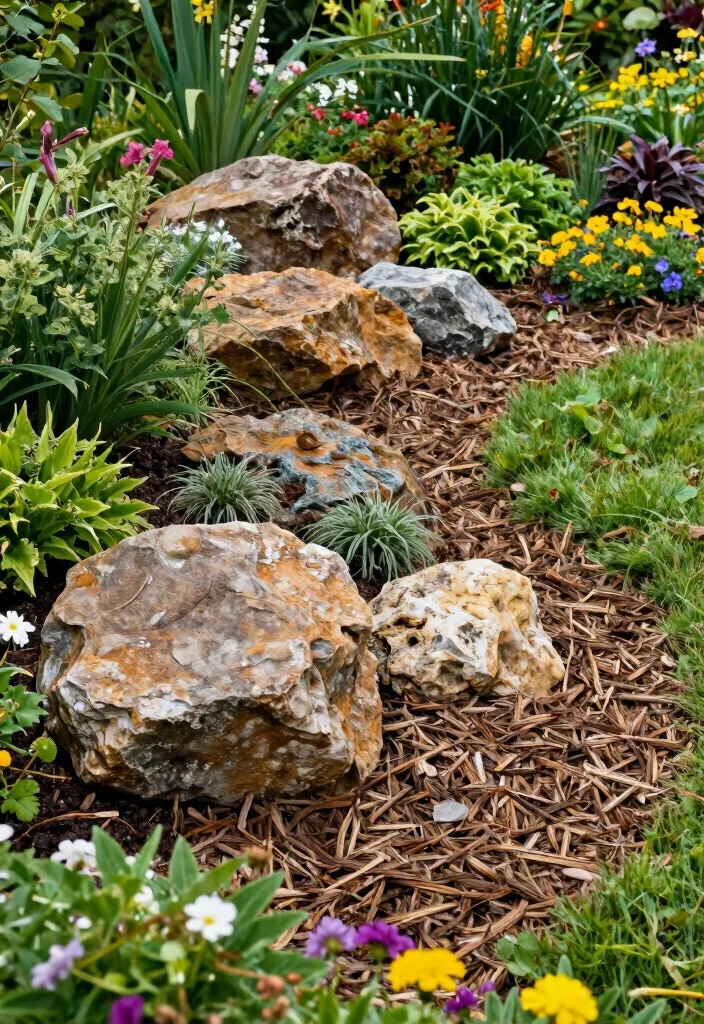
Transforming your outdoor space with rock and mulch landscaping offers both beauty and practicality.
These twelve ideas can inspire you to create a low-maintenance garden that thrives in an urban setting while providing effective weed control.
Try incorporating these designs into your own garden for a stylish, clean contrast that’s sure to impress!
Frequently Asked Questions
What makes rock and mulch landscaping ideas ideal for weed control in urban gardens?
In urban gardens, rock and mulch landscaping ideas excel at weed control because a thick mulch layer plus smart rock placements deprives weed seeds of light and moisture.
Start with a weed barrier and then apply a mulch depth of 2-4 inches or a shallow layer of decorative rocks for paths and beds.
This practical approach is a core example of weed control techniques that stay effective with minimal maintenance, while also offering outdoor aesthetics that pop in small spaces.
Tip: mix textures—dark mulch with light gravel—to boost contrast and clearly defined zones.
How do I choose durable landscaping materials for a low-maintenance rock and mulch design?
For longevity, pick materials that stand up to sun, cold, and foot traffic. Try durable rocks like granite, basalt, or lava rock, paired with long-lasting mulch options such as aged hardwood or cedar mulch. Consider color contrast and drainage, then install sturdy edging to keep materials in place. This combination is the essence of durable landscaping materials that reduce upkeep and keep your landscaping with rocks looking sharp all year.
What are practical steps to install rock and mulch for clean contrast in a small urban yard?
Plan zones first, then clear existing weeds and debris. Set a clean edge around each bed, lay down a weed barrier where needed, and add a base layer of soil or fabric. Place rocks for contrast and define bed lines, then top with mulch to the desired depth (typically 2-4 inches for mulch). Finish with crisp edging and occasional top-ups to maintain clean contrast in a compact space, as part of landscaping with rocks that creates visual interest.
Can rock and mulch designs be maintained easily across seasons?
Absolutely. In spring, refresh mulch depth, prune nearby plants, and check for weed growth beneath rocks. In summer, adjust irrigation to avoid soggy beds and replenish mulch as it decomposes. In fall and winter, inspect for freeze‑thaw damage and reseed bare patches. With durable materials and regular edging, these designs stay neat with minimal effort, delivering steady outdoor aesthetics year-round.